


How does a Non - return Valve perform under variable flow conditions?
As a supplier of non - return valves, I've witnessed firsthand the critical role these components play in various fluid systems. Non - return valves, also known as check valves, are designed to allow fluid to flow in one direction only, preventing backflow and protecting equipment from potential damage. In real - world applications, flow conditions are rarely constant. They can vary due to factors such as changes in demand, system startup and shutdown, or fluctuations in the source of the fluid. Understanding how non - return valves perform under variable flow conditions is essential for ensuring the efficiency and reliability of the entire system.
Basic Principles of Non - return Valves
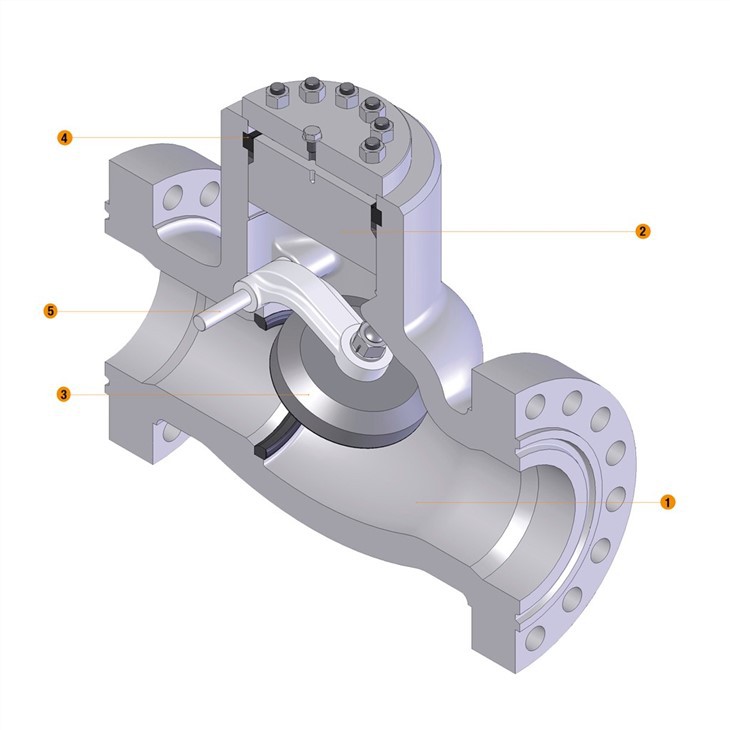
Before delving into their performance under variable flow, it's important to understand the basic operating principles of non - return valves. These valves typically have a movable part, such as a disc or a ball, which is held in a closed position by a spring or the force of gravity. When the fluid flows in the forward direction with sufficient pressure, it overcomes the closing force and pushes the movable part open, allowing the fluid to pass through. Once the flow stops or reverses, the closing force reseals the valve, preventing backflow.
There are several types of non - return valves, each with its own characteristics and suitability for different applications. For example, the Single Disc Swing Check Valve features a disc that swings on a hinge. When the fluid flows forward, the disc swings open, and when the flow reverses, it swings back to close the valve. The Swing Check Valve is a more general term that can encompass single - disc and multi - disc designs. It is known for its simplicity and reliability, often used in large - diameter pipelines. The Pressure Seat Swing Check Valve is designed to provide a tight seal under high - pressure conditions, with the pressure of the fluid helping to seat the valve more effectively.
Performance under Low - Flow Conditions
Under low - flow conditions, non - return valves may face challenges in opening fully. The pressure exerted by the fluid may not be sufficient to overcome the closing force completely, resulting in a partially open valve. This can lead to increased flow resistance and energy losses in the system. For instance, in a single - disc swing check valve, if the flow rate is too low, the disc may not swing fully open, causing a restriction in the flow path.
Moreover, at low flows, the valve may be more prone to chattering. Chattering occurs when the valve repeatedly opens and closes rapidly due to the instability of the flow. This can cause excessive wear on the valve components, leading to premature failure and potential leakage. To mitigate these issues, some non - return valves are designed with low - cracking pressures, which means they can open with a relatively small pressure difference. This allows the valve to operate more effectively at low flow rates.
Performance under High - Flow Conditions
When the flow rate is high, non - return valves need to be able to handle the increased forces and velocities. High - flow conditions can generate significant dynamic forces on the valve components. For example, in a swing check valve, the high - velocity fluid can cause the disc to slam shut when the flow reverses, creating a water hammer effect. Water hammer is a pressure surge that can damage the valve, pipes, and other equipment in the system.
To prevent water hammer and ensure proper performance at high flows, non - return valves may be equipped with features such as damping mechanisms. These mechanisms slow down the closing speed of the valve, reducing the impact force and minimizing the risk of water hammer. Additionally, the valve design needs to be able to withstand the high - pressure differentials and forces associated with high - flow rates. Valves made from high - strength materials and with robust construction are more suitable for such applications.
Performance during Flow Transients
Flow transients, such as sudden changes in flow rate due to pump startup or shutdown, can also have a significant impact on the performance of non - return valves. During a pump startup, the rapid increase in flow rate can cause the valve to open suddenly. If the valve is not designed to handle this rapid change, it may experience excessive stress on its components. Similarly, during pump shutdown, the sudden decrease in flow can lead to backflow, and the valve needs to close quickly to prevent it.

In some cases, flow transients can cause the valve to experience cavitation. Cavitation occurs when the pressure in the fluid drops below the vapor pressure, causing the formation of vapor bubbles. These bubbles can collapse violently when they enter a region of higher pressure, creating shock waves that can damage the valve surfaces. To prevent cavitation, non - return valves may be designed with smooth internal surfaces and appropriate flow paths to maintain a stable pressure distribution.
Influence of Fluid Properties
The properties of the fluid being transported also play a crucial role in the performance of non - return valves under variable flow conditions. For example, viscous fluids can increase the flow resistance and make it more difficult for the valve to open and close. In a viscous fluid system, a non - return valve may require a higher cracking pressure to open, and the closing time may be longer.
Corrosive fluids can also affect the valve's performance over time. The valve materials need to be selected carefully to resist corrosion. For instance, in a chemical processing plant where corrosive chemicals are being transported, valves made from corrosion - resistant materials such as stainless steel or titanium are preferred. Additionally, fluids containing solids or particles can cause abrasion on the valve surfaces, leading to wear and reduced sealing performance. In such cases, valves with hardened surfaces or linings may be used to extend their service life.
Importance of Proper Valve Selection
Selecting the right non - return valve for a specific application is essential for ensuring optimal performance under variable flow conditions. Factors such as the expected flow range, fluid properties, system pressure, and temperature need to be considered. A valve that is too large for the application may not operate effectively at low flow rates, while a valve that is too small may not be able to handle high - flow conditions.
As a non - return valve supplier, we work closely with our customers to understand their specific requirements and recommend the most suitable valve types and sizes. Our expertise in valve design and application allows us to provide customized solutions that can withstand the challenges of variable flow conditions. We also offer technical support and after - sales service to ensure that our customers' systems operate smoothly.
Conclusion
In conclusion, the performance of non - return valves under variable flow conditions is a complex issue that depends on various factors, including the valve type, flow rate, flow transients, and fluid properties. Understanding these factors is crucial for ensuring the efficient and reliable operation of fluid systems. At our company, we are committed to providing high - quality non - return valves that can meet the diverse needs of our customers. Whether you are dealing with low - flow, high - flow, or transient flow conditions, we have the expertise and products to help you achieve optimal system performance.
If you are in need of non - return valves for your application, we invite you to contact us for a detailed discussion. Our team of experts will be happy to assist you in selecting the right valve and providing you with the best solutions. Let's work together to ensure the success of your fluid system.
References
- Stoecker, W. F. (1998). Refrigeration and Air Conditioning. McGraw - Hill.
- Incropera, F. P., & DeWitt, D. P. (2002). Fundamentals of Heat and Mass Transfer. John Wiley & Sons.
- Crane Co. (1988). Flow of Fluids Through Valves, Fittings, and Pipe. Technical Paper No. 410.