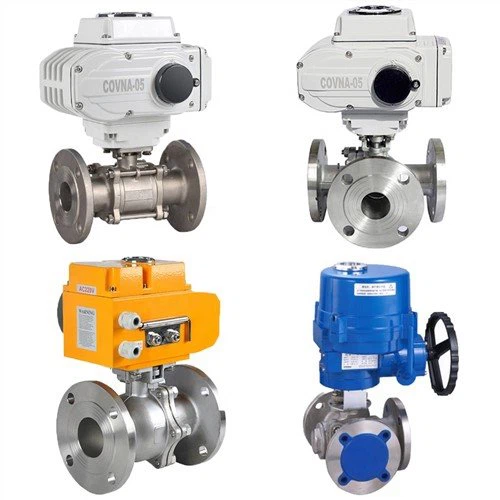
What Is Ball Valve?
A ball valve is a flow control device that uses a hollow, perforating, and pivoting ball to control the flow of liquid or gas flowing through it. The ball is rotated using a handle or lever to open or close the valve, and the flow is controlled by the position of the ball about the valve seat. It opens when the ball hole is in line with the flow inlet and closes when it is pivoted 90 degrees by the valve handle or lever, thus blocking the outflow.
Rich experience
The company' s founder team graduated from mechanical and electrical automation majors and has been engaged in the valve industry for more than 20 years. It is committed to providing customers with a complete set of fluid control solutions. It is a company integrating scientific research and development, A large-scale valve enterprise integrating testing and testing, manufacturing and sales.
Wide product range
The company mainly produces API 6D pipeline ball valves, gate valves, globe valves, check valves, plug valves and API 609 series butterfly valves in 6 categories, with more than 1,000 specifications and varieties. Products widely cover petrochemical, coal chemical, nuclear power, LNG, marine, aerospace, metallurgy, papermaking and other industries.
Complete qualifications
The company has a complete international standardized management system, adopts the world's top precision casting technology and modern intelligent electronic detection system, and uses advanced SAP resource management, strip storage management system and ERP system to effectively manage the factory.
High standard products
After years of hard work and development, it has become a key backbone enterprise in the valve industry. It specializes in improving the innovation and manufacturing capabilities of special valves in harsh industrial environments. High-quality products and fast after-sales service have won praise and trust from customers at home and abroad.
1. Using ball valves is easy and cost-effective.
2. Ball valves ensure leak-proof service.
3. A ball valve opens and closes quickly.
4. Ball valves are much smaller than gate valves.
5. Ball valves are lighter than gate valves.
6. The flow resistance of a ball valve is very low in the fully open position, as compared to that of a gate valve.
7. Gate or globe valves do not offer the multi-design flexibility of ball valves, so they require fewer valves.
8. Variations in the size and shape of ball valves provide a wide range of options.
9. Ball valves of high quality provide safe service in high temperature and high-pressure applications.
10. Ball valves require less force to operate than other valves.
11. Ball valves do not require lubrication.

Polyvinyl chloride, generally known as PVC, is a type of plastic that is utilized in the creation of ball valves. Their flexibility and smoothness, which facilitate easier movements for ball valve parts, are one of their advantages.
Ball valves used in systems with low or medium pressure are best made of bronze or brass. Additionally, these materials are resistant to corrosion and water.
Since stainless steel has many advantageous qualities, including durability and corrosion resistance, it is one of the key materials used in the design of many ball valve types. Stainless steel ball valves can be utilized in both general plant systems and geochemical systems.
Chlorinated PVC, often known as CPVC, is identical to PVC but can withstand greater temperatures. Ball valves that handle hot water can be made of this material.
Even though iron is less flexible than PVC, it nevertheless has a purpose in the production of ball valves. Iron is used frequently to make ball valves because it can tolerate a wide variety of pressures and temperatures.
They are used in situations where tight shut-off is required.
They are wide duty pipe valves.
They are able to transfer liquids with suspended solids (slurries), gases, liquids.
They provide superior ease of operation.
They can maintain and regulate high volume, high pressure and high temperature flow.
The ball valve body design permits inspection as well as repair of seats and seals without removing the valves’ body from the line.
Components of Ball Valve
Body or shell
The shell of a ball valve houses all other components of the valve. It is also the first pressure boundary of the valve, as it imparts to the ball valve the first line of resistance against the flow of materials through pipes connected to the valve. The body of a ball valve is the main framework of the valve. It enables holding together and protecting the other components or parts of the ball valve.
Bonnet
The opening of the ball valve’s body is covered by the bonnet. To ensure that it stays intact and in place, it is usually bolted or screwed to the body. Bonnet becomes the second pressure boundary of the valve as it reinforces the strength of the body to counter the pressure of materials flowing through the pipes connected to the valve. The bonnet is usually made of the same material as the body of the valve to enhance its strength and durability.
Trim
The trim of a ball valve consists of all the moving parts of the valve. This includes the ball (disk), seat, stem, and sleeves. The hollow sphere in the ball acts as its disk. It is placed in the center of the valve and it turns to allow materials to pass through. As the actuator is turned, the stem moves as well, in turn, rotates the ball. Welded joints connect the stem, ball, and actuator.
Actuator
What we use to open and close the valve is the actuator of the ball valve. Handwheels, levers, motors, solenoids, pneumatic operators, and hydraulic arms are all various ball valve actuators. In most ball valves the actuator is mounted over the bonnet of the ball valve through a yoke.
Packing
Packing shuts out any leaks through the stem. Ball valve packing is found in the space between the stem and the bonnet. Usually made of fibrous materials like flax or Teflon packing protects the internal parts of the valve by forming a seal over them to prevent any leakages.
Media
Ball valves are typically used for controlling the on/off flow of liquids and gasses, such as water, oil, air, and chemicals. However, media with abrasive suspended particulates can lead to premature failure of valve seals, causing leaks or increased operating torque, ultimately leading to actuation failure.
Materials
Plastic ball valves are cost-effective but not suitable for high-temperature environments and have a shorter lifespan compared to metal valves. Metal valves are recommended for use with pressurized gasses for safety reasons. It is crucial to verify that the valve body and seal materials are compatible with the media flowing through the valve.
Temperature and pressure ratings
When determining the suitability of a valve, it is essential to consider its pressure and temperature rating. The rating determines the proper materials, valve design, and seal materials that should be used. The rating, along with the cycle frequency, significantly affects the lifespan of the ball valve.
Actuation
Ball valves can be actuated manually, pneumatically, electrically, or hydraulically. Pneumatic actuators offer fast cycle times and high durability. Electric actuators are suitable for low cycle speeds and environments without access to compressed air.
Maintenance Tips for Ball Valve
Regular cleanings
It is important to keep ball valves clean to extend their lifespan. It is recommended to clean them at least once a year, or more frequently if the environment is particularly filled with dust or dirt. Use a soft towel to wipe off oil, dust, or dirt from the casing. Use a wire brush to clear any buildup on the valve stem or other components.
Valve lubrication
Ball valve lubrication is essential to prevent abrasion and ensure smooth operation of the valve parts. Select a lubricant that is suitable for the valve materials and system media, such as water-insoluble, synthetic, or oil-based lubricants. However, it is crucial to avoid solid- or clay-based lubricants as they can accumulate inside the valve cavity.
Routine inspections
Check for regular wear and tear by checking the valve's seats, seals, and stem for any signs of corrosion, leaks, or damage. Increase the frequency of inspections for high-pressure and high-cycle applications.
Scheduled plant shutdowns
Routine shutdowns are ideal for ball valve inspections. The process involves removing the valves from the piping system, disassembling them, cleaning the interiors, and replacing any worn or broken components. Pay careful attention to the seals or other rubber parts.
Regular testing
Regular testing, like pressure testing (filling the valve body with a testing fluid and applying pressure for a specified length of time to check if it leaks) is essential to ensure that the ball valve is functioning correctly.
Storage
Store the ball valve in a dry, well-ventilated area away from direct sunlight and extreme temperatures. Ideally, the temperature of the storage area should be between 0°C (32°F) and 49°C (120°F). If possible, store the valve in its original packaging or in a protective container to prevent any damage during transport or storage.
How to Choose Ball Valve
Application and use
Determine the intended use of the ball valve, whether it is for fluid control, process control, or shut-off operations. This will help you select the appropriate material, size, pressure rating, and temperature rating.
Material
The material chosen for the ball valve will depend on the type of fluid being handled and its corrosive nature. Common materials for ball valves include carbon steel, stainless steel, brass, and plastic. Stainless steel is typically used for highly corrosive fluids.
Size
The size of the ball valve should be matched to the flow capacity required to ensure efficient flow control. In general, a larger valve will have a higher flow capacity but may be more expensive and occupy more space.
Pressure rating
The pressure rating of the ball valve must be able to handle the maximum pressure of the system without leaking or breaking. Be sure to choose a valve with a pressure rating that is at least as high as the maximum pressure of your system to ensure safety.
Temperature rating
The temperature rating of the ball valve must be able to handle the maximum temperature of the fluid passing through it without failure or damage. If you are working with high-temperature fluids, choose a ball valve with a high temperature rating to ensure its efficiency and safety.
Handle and actuator
The handle and actuator allow manual and automatic operation of the ball valve, respectively. It is important to consider the space available for handle and actuator operation and choose ones that are easy to use and access. Choose a handle and actuator that are sturdy and reliable to ensure longevity and efficient operation of the ball valve.
Antistatic feature
Antistatic feature is a safety feature in ball valves to arrest the static charge generated by the contact between the metallic seat and the Polytetrafluoroethylene (PTFE) seat. If the static charge produced in the valve is not contained, it could lead to a combustion with flammable media.
The antistatic feature is achieved by inserting devices called electrostatic spring sets between the ball and stem, and the stem and body to ensure that all metal valve parts are grounded. An electrostatic spring set is an assembly of a spring and a stainless steel ball.
Firesafe feature
Firesafe feature is a safety feature in ball valves to minimize the leakage, in case of a fire in the pipeline.The firesafe feature is achieved by incorporating a secondary metal sealing surface behind the primary PTFE seat.
In case of a fire in the pipeline, the soft seat may melt and become ineffective. In such a situation, the secondary metallic seat moves into action to provide a metal-to-metal seal, minimizing the leakage for an effective valve shutoff.
Anti-blowout stem
Anti-blowout stem feature is a safety feature to ensure that the stem is not pushed out of the valve's body by the inline pressure. The anti-blowout stem feature is achieved by integrating an inverted T-shaped shoulder design for the stem that is then inserted from inside the valve's body.
Emergency sealant injection system
Emergency sealant injection system is a safety feature in ball valves to provide sealing at both seats and the stem, in case of a leakage. Ball valves are fitted with a sealant injection mechanism, through which the sealant is injected to provide a barrier that minimizes leakage across the valve.
Double block and bleed feature
Double block and bleed feature is a safety feature to achieve a definite shutoff in the ball valve to keep the process media away from the other equipment downstream. When a ball valve is turned off, the two pressure-energized seats act as two independent block valves, and the media in the cavity between the two seats is bled off using a bleed valve to release the pressure on the seats.
|
|
Ball valve |
Gate valve |
|
Shut off mechanism |
Fast shut-off with only a quarter turn (90° turn) to close the valve. |
Slow shut off as it requires more than a 360° turn to shut off the valve. |
|
Water hammer |
Fast opening and closing may cause water hammer.* |
Slow opening and closing reduces the risk of water hammer.* |
|
Visual detection |
Open or closed state of valve can be visually detected with position of the handle. |
Difficult to detect the open or closed state of valve. |
|
Cost |
Typically more expensive than a gate valve of the same specifications. |
Typically cheaper than a ball valve of the same specifications. |
|
Installation space |
Requires more space than a gate valve to accommodate for quarter turn handle. |
Requires relatively less installation space than a ball valve. |
|
Size |
Better suited for bore sizes below 2". |
Better suited for bore sizes above 2". |
|
Leakage |
Provides tight seal even if used after a long period of time. |
More prone to leaks than a ball valve. |
|
Durability |
Durable and less prone to damage |
Valve stem can be prone to corrosion making the valve less durable. |
General Ball Valve Markings
Ball valve size
The valve pipe size is often simply noted in inches, however, you may also find the pipe size noted with a DN prefix. This stands for “diameter nominal” and the number following the prefix is the valve pipe size in millimeters.
Mounting Information
If your valve utilizes an ISO standardized mounting configuration to mount the valve to the actuator, this is where you will find that information.
Body material
This specifically states the type of material used to create the valve body. For example, CFM8 is the code for cast 316 stainless steel.
Pressure class
“PN” refers to pressure nominal. The number after PN indicates the pressure class of the valve in bars, where 1 bar equals 14.5038 PSI. Some manufacturers may simply list the pressure rating in PSI as well.
Casting number
The casting number is used to track materials and batches. There may be more than one of these, depending on the valve.
Lead free
Some ball valves will be marked with an “LF” to indicate they are lead free.
Manufacturer Information
The manufacturer's name should be on the valve body.
Model number
The model or part number of the ball valve is the manufacturer's identification process.
PSI rating
Pounds per square inch (PSI) is a measurement of pressure that is commonly used in the U.S. for equipment and instruments. A ball valve’s PSI measures the pressure of the media that flows through the valve as it comes in contact with a square inch of pipe or other fittings.
CWP & WOG ratings
Cold working pressure (CWP) indicates the valve’s maximum pressure rating at temperatures between -20°F to 100°F. This is commonly referenced alongside the valve’s pressure rating. For example, 720 CWP indicates the valve is rated to 720 PSI within the CWP temperature range.
WOG (water, oil, gas) is an older term that is no longer used as frequently as it once was. It simply means that the valve is intended for use with water, oil or gas, with the exception of combustible gases.
WSP rating
Working steam pressure (WSP) indicates the maximum steam pressure that a ball valve can withstand at the highest temperature rating. This might also be marked as SWP, meaning steam working pressure.
Gas ratings
Only certain ball valves are approved for use with combustible gases, and these will have specific markings that explain where they can be used. Some of these include:
Indoor gas ratings
Outdoor gas ratings
CAN/CGA-3.16
This is the Canadian gas pressure rating for both outdoor and indoor valves used in gas piping systems.
BRS125G
This is a U.S. gas pressure rating for valves in gas piping systems.
SUNAY is a professional manufacturer of valves. Headquartered in Anfeng Industrial Zone, Yongjia, Zhejiang. The company was established in 2010 with a registered capital of 10.8 million yuan and has three holding manufacturing companies. The company’s founder team graduated from mechanical and electrical automation majors and has been engaged in the valve industry for more than 20 years. After years of hard work and development, it has become a key backbone enterprise in the valve industry.
Q: What is a ball valve used for?
Q: What is the difference between a ball valve and a regular valve?
Q: What is the difference between a ball valve and a gate valve?
Q: What are the 4 types of ball valves?
Q: Do ball valves go bad?
Q: Where should a ball valve be installed?
Q: Should ball valve be fully open?
Q: Can you use a ball valve for water?
Q: Which is better for water shut off ball valve or gate valve?
Q: Should I replace gate valves with ball valves?
Q: Why is ball valve preferred over gate valve?
Q: What is the most common ball valve?
Q: Why is my ball valve letting water through when closed?
Q: What causes a ball valve to fail?
Q: How much does it cost to install a new ball valve?
Q: How long should a ball valve last?
Q: What is the most durable ball valve?
Q: Which ball valve is best?
Q: Does ball valve direction matter?
Q: Can you leave a ball valve partially open?
We're well-known as one of the leading ball valve manufacturers and suppliers in China. We warmly welcome you to buy or wholesale customized ball valve at competitive price from our factory. Contact us for more details.
pp ball valve flange end, 1 1 4 pvc ball valve, apollo stainless steel ball valve