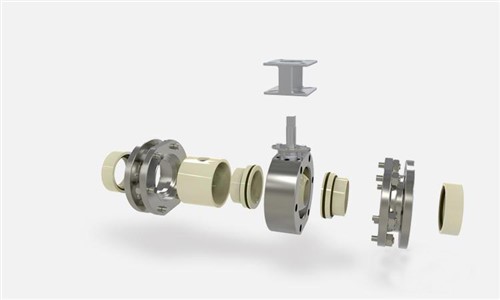
What is Ceramic Valve
Ceramic valves refer to valves with ceramic decoration, balls, seats, discs or liners. A carbon steel or stainless steel body is used to protect ceramic trim from damage due to sudden thermal or mechanical shock. Advanced ceramics used in manufacturing include alumina, zirconia and silicon nitride. Significant advantages of using ceramics in valves include wear resistance and light weight. Due to their excellent resistance to corrosion, abrasion and abrasion, ceramic valves are often used in severe corrosion and wear applications such as flue gas desulfurization and pneumatic waste conveying systems.
Rich experience
The company' s founder team graduated from mechanical and electrical automation majors and has been engaged in the valve industry for more than 20 years. It is committed to providing customers with a complete set of fluid control solutions. It is a company integrating scientific research and development, A large-scale valve enterprise integrating testing and testing, manufacturing and sales.
Wide product range
The company mainly produces API 6D pipeline ball valves, gate valves, globe valves, check valves, plug valves and API 609 series butterfly valves in 6 categories, with more than 1,000 specifications and varieties. Products widely cover petrochemical, coal chemical, nuclear power, LNG, marine, aerospace, metallurgy, papermaking and other industries.
Complete qualifications
The company has a complete international standardized management system, adopts the world's top precision casting technology and modern intelligent electronic detection system, and uses advanced SAP resource management, strip storage management system and ERP system to effectively manage the factory.
High standard products
After years of hard work and development, it has become a key backbone enterprise in the valve industry. It specializes in improving the innovation and manufacturing capabilities of special valves in harsh industrial environments. High-quality products and fast after-sales service have won praise and trust from customers at home and abroad.
Corrosion resistance
Ceramic Valve have very stable chemical properties for most acid-base media, performing excellent corrosion resistance.
High strength
Ceramic Valve adopts high-performance advanced ceramics as valve ball and lining materials — flange connection, three-stage structure design, forged steel shell, ensuring easy maintenance and high strength.
High hardness
Ceramic Valve balls have hardness up to HRA88, second only to diamond.
Wear resistance
Advanced ceramics' ultra-high hardness allows Johncera's ceramic valves to operate against the erosion of solid particles in fluid flow. Also, the conveying medium will not be contaminated by the peeling material caused by scouring.
Zero leakage
Ceramic Valve adopt a surface contact sealing structure between ball bodies and valve seats. The sealing surface is well polished with high roundness and accuracy. ANSI VI sealing level achieved.
Self-lubrication
With precise ground surface between ball bodies and valve seats, Ceramic Valve are self-lubricated in the On/Off process with slight resistance and smooth On/Off switch.
Low torque value
Since Ceramic Valve are self-lubricated, therefore they have low torque value and easy to switch.
Long service life
Because of the abovementioned properties, Ceramic Valve significantly extend service life and reduce maintenance rates.
Mining Industry: In mineral processing plants, ceramic valves handle slurries containing abrasive particles, where the wear resistance of ceramics is highly beneficial. They are used in flotation cells, thickeners, and pipelines.
Power Generation: These valves are utilized in coal-fired and waste-to-energy plants for ash handling systems, where they manage the flow of hot, abrasive ash slurries.
Pulp and Paper: Ceramic valves are used in bleaching and digester applications in paper mills, where they handle corrosive chemicals and high temperatures.
Chemical Processing: In the chemical industry, ceramic valves are selected for their ability to resist corrosive substances and harsh chemicals, such as acids, alkalis, and chlorinated compounds.
Semiconductor Manufacturing: The need for purity in semiconductor fabrication processes makes ceramic valves ideal for handling ultra-pure water and corrosive chemicals without contamination.
Oil and Gas: In oil and gas extraction and processing, ceramic valves are used for wellhead applications, pipeline isolation, and in facilities where corrosive substances are present.
Water Treatment: For both potable water and wastewater treatment, ceramic valves are used in systems that transport slurries, treat with chemicals, and manage backwash flows.
Metallurgical Plants: These valves are used in smelting, refining, and other metallurgical processes where they encounter high temperatures and corrosive molten metals or salts.
Automotive: In the automotive industry, ceramic valves are found in catalytic converters and exhaust systems, where they must withstand high temperatures and corrosive exhaust gases.
Aerospace: The extreme conditions encountered in aerospace applications, such as high temperatures and pressures, make ceramic valves suitable for fuel systems and engine components.

Ceramic ball valve
Ball valves can be used as flow control valves or shut-off valves for corrosive fluids and high-temperature fluids containing solid materials. Depending on the application, you can choose valves with over-flow components that are all ceramic, or valves that only their important components are sprayed with ceramic. Click the bottom video to see what a ceramic ball valve is like.
Ceramic gate valve
For coal gasification equipment, since the high-temperature and high-pressure gas contains a hard particle corrosive gas stream of pulverized coal and ash powder, it is necessary to use a ceramic gate valve under such severe conditions.In the past, metal-made valves could not meet the requirements of use even if they were deposited on a sealing surface with cobalt-chromium-tungsten carbide. At present, metal is used on the high-temperature pressure-resistant part of the valve casing, and ceramic is used in the sealing part, so that the service life of the valve is greatly improved.


Ceramic diaphragm valve
The structure of the ceramic diaphragm valve is very simple, and its contact medium is composed of a ceramic valve body and a diaphragm. The ceramic seat surface is not easily leaked after fine grinding and polishing. Fluoroelastomer is used as the rubber lining material for the support. In addition, the channel surface of the ceramic valve body is smooth, so its friction with the medium is small.
Ceramic plug valve
The ceramic plug valve is composed of a ceramic valve body and a plug, and the sealing member uses Teflon. It is a straight-through valve with a small flow resistance. The part of the ceramic plug valve contacting with medium is a ceramic single part with a lining, which will not be deformed under high temperature and high vacuum or by the action of the permeable liquid.

High Wear Resistance
Ceramic materials, especially those like silicon carbide and zirconia, have an extremely hard surface that is resistant to abrasion and erosion. This makes ceramic valves ideal for handling slurries, abrasive particulates, and corrosive substances.
Corrosion Resistance
Ceramics are chemically inert to a wide range of chemicals, making ceramic valves impervious to corrosion in many aggressive environments, including acidic,alkalinity, and chlorinated media.
High Temperature Tolerance
Many ceramic materials can operate at temperatures that exceed the limits of conventional metals. This allows ceramic valves to be used in high-temperature processes without compromising their structural integrity or sealing performance.
Low Thermal Expansion
Ceramic materials have low coefficients of thermal expansion, which means they change shape less with temperature changes. This characteristic contributes to the valve's ability to maintain a precise fit and seal even when subjected to thermal cycling.
Long Service Life
Due to their superior resistance to wear, corrosion, and thermal shock, ceramic valves often have a much longer service life than their metallic counterparts, leading to lower maintenance costs and reduced downtime.
Non-Reactive Nature
Ceramics do not react with most chemicals, meaning they won't contaminate the process stream. This is particularly important in applications requiring purity, such as in the pharmaceutical or semiconductor industries.
Components of Ceramic Valve

Body (Housing)
The body is the main structure of the valve that holds all other components in place. It is typically made from a robust material such as stainless steel or carbon steel, and it must be compatible with the process fluid.

Bonnet
Attached to the body, the bonnet serves as a cover for the internal components of the valve. It is usually removable for maintenance and repair.

Seat and Sealing Elements
These components create a seal to prevent fluid leakage. In ceramic valves, the seat is often made from a hard, wear-resistant material like ceramic, while the sealing element could be a soft material like PTFE that provides a tight seal against the hard surface of the ceramic seat.

Ceramic Disc or Plug
The disc or plug is the primary moving component of the valve that modulates the flow. It is typically made from a hard ceramic material like zirconia or silicon carbide to resist erosion and abrasion from the flowing fluid.

Stem
The stem connects the disc or plug to the actuator and transmits the motion required to open or close the valve. It may be made from stainless steel or coated to protect against corrosion.

Actuator
The actuator is responsible for positioning the stem, thereby opening or closing the valve. There are various types of actuators including electric, pneumatic, hydraulic, and manual. The choice depends on the required force to move the valve and the control mechanism available.

Shaft Guide
This component ensures the smooth operation of the stem and prevents lateral movement, which could lead to wear or damage to the seals.

Gaskets and O-Rings
These are small sealing elements typically made from elastomers that provide additional sealing between mating parts, such as the body and bonnet.
Application Type
Determine the type of application in which the ceramic valve will be used. This includes the fluid being controlled (water, slurries, corrosive chemicals, etc.), the process environment (high temperature, high pressure, vacuum), and the function of the valve (shutoff, control, check).
Ceramic Material
Select the appropriate ceramic material based on the chemical compatibility with the fluid and the operating environment. Common ceramic materials include zirconia (ZrO2), alumina (Al2O3), silicon carbide (SiC), and tungsten carbide (WC). Each material has different properties, such as hardness, thermal conductivity, and resistance to abrasion and corrosion.
Operating Conditions
Evaluate the operating conditions, including temperature range, maximum pressure, and flow rate. The ceramic valve must be capable of performing reliably under the expected conditions without degradation or failure.
Valve Design
Choose the valve design that best suits the application's requirements. Options include ball, gate, globe, plug, butterfly, and diaphragm valves. Each design offers different flow characteristics, sealing performance, and operational considerations.
End Connections
Determine the type of end connections required for the piping system. Common options include flanged, threaded, welded, or socket welded ends. The connection method should match the existing piping infrastructure.
Actuation Mechanism
Decide on the type of actuator needed to operate the valve, which can be manual, pneumatic, hydraulic, or electric. The choice of actuator will depend on the available power source, desired control precision, and integration with the existing system.
Size and Flow Capacity
Select the size of the valve based on the flow rate requirements and the pipe diameter. Ensure that the valve can handle the maximum flow without significant pressure drop or restriction.
Durability and Longevity
Consider the expected service life of the valve and its maintenance requirements. Ceramic valves are known for their long life and durability due to the hardness and wear resistance of ceramic materials. However, the quality of manufacturing and design also play a crucial role in longevity.
Safety and Standards Compliance
Verify that the ceramic valve meets relevant safety standards and industry regulations. This ensures that the valve is suitable for its intended use and provides protection against potential hazards.Choose a reputable supplier and manufacturer with a track record of producing high-quality ceramic valves. A reliable supplier will offer good after-sales support and technical assistance.
Inspection: Perform regular visual inspections of the valve for signs of damage, wear, or leaks. Pay special attention to the seating area, stem, and gaskets.
Cleaning: Keep the valve clean by removing any accumulated debris or deposits. Use appropriate solvents or cleaning agents that do not react with the ceramic material or the process fluid. Avoid using abrasive materials that could scratch or damage the ceramic surfaces.
Lubrication: If the valve has moving parts that require lubrication, use a compatible lubricant that is resistant to the process conditions. Be cautious with ceramic components, as excessive lubrication can attract contaminants.
Leak Checks: Regularly check for leaks around the valve body, bonnet, and connections. Tighten any loose bolts or fittings as necessary. For sealing issues, replace the gaskets or O-rings if they show signs of deterioration.
Operation: Ensure that the valve is operated within its specified pressure and temperature ranges. Avoid rapid cycling, as this can cause thermal stress and accelerated wear. Use the correct actuation method according to the valve manufacturer's specifications.
Replacement of Worn Parts: Promptly replace any worn or damaged parts, such as the disc, seat, stem, or gaskets. Using original equipment manufacturer (OEM) parts will help maintain the valve's integrity and performance.
Storage: When not in use, store ceramic valves in a dry, clean environment to prevent exposure to moisture, which could cause corrosion of metal parts. Cover the valves to protect them from dust and contaminants.
Documentation: Keep a record of all maintenance activities, including inspection dates, findings, repairs, and replacements. This documentation will assist in tracking the valve's history and identifying any recurring issues.
Follow Manufacturer's Guidelines: Always refer to the manufacturer's maintenance manual for specific recommendations regarding care, operation, and maintenance schedules.Ensure that personnel operating and maintaining the valves are properly trained on the valve's operation, maintenance procedures, and safety protocols.
SUNAY is a professional manufacturer of valves. Headquartered in Anfeng Industrial Zone, Yongjia, Zhejiang. The company was established in 2010 with a registered capital of 10.8 million yuan and has three holding manufacturing companies. The company's founder team graduated from mechanical and electrical automation majors and has been engaged in the valve industry for more than 20 years. After years of hard work and development, it has become a key backbone enterprise in the valve industry. It specializes in improving the innovation and manufacturing capabilities of special valves in harsh industrial environments. It is committed to providing customers with a complete set of fluid control solutions. It is a company integrating scientific research and development, A large-scale valve enterprise integrating testing and testing, manufacturing and sales.The company mainly produces API 6D pipeline ball valves, gate valves, globe valves, check valves, plug valves and API 609 series butterfly valves in 6 categories, with more than 1,000 specifications and varieties.


We're well-known as one of the leading ceramic valve manufacturers and suppliers in China. We warmly welcome you to buy or wholesale customized ceramic valve at competitive price from our factory. Contact us for more details.