Zhejiang Sunawei Valve Co., Ltd
+86-577-67330098
Contact Us
  • Tel: +86-577-67330098
  • Fax: +86-577-67998131
  • Mob: +8618757788866
  • Email: snv@sunawevalve.com
  • Add: Anfeng Industrial, Oubei Town, Wenzhou City, Zhejiang, China

What Is Check Valve?


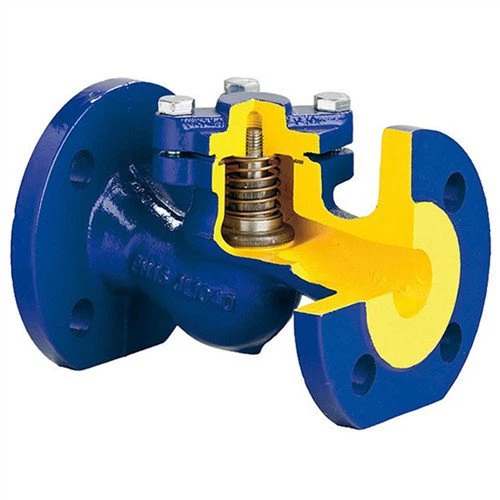
Check valves are two-port valves, meaning they have two openings in the body, one for fluid to enter and the other for fluid to leave. There are various types of check valves used in a wide variety of applications. Check valves are often part of common household items.

Why Choose Us?

Rich experience

The company' s founder team graduated from mechanical and electrical automation majors and has been engaged in the valve industry for more than 20 years. It is committed to providing customers with a complete set of fluid control solutions. It is a company integrating scientific research and development, A large-scale valve enterprise integrating testing and testing, manufacturing and sales.

Wide product range

The company mainly produces API 6D pipeline ball valves, gate valves, globe valves, check valves, plug valves and API 609 series butterfly valves in 6 categories, with more than 1,000 specifications and varieties. Products widely cover petrochemical, coal chemical, nuclear power, LNG, marine, aerospace, metallurgy, papermaking and other industries.


Complete qualifications

The company has a complete international standardized management system, adopts the world's top precision casting technology and modern intelligent electronic detection system, and uses advanced SAP resource management, strip storage management system and ERP system to effectively manage the factory.

High standard products

After years of hard work and development, it has become a key backbone enterprise in the valve industry. It specializes in improving the innovation and manufacturing capabilities of special valves in harsh industrial environments. High-quality products and fast after-sales service have won praise and trust from customers at home and abroad.


Benefits of Check Valve

● Protect pumps and compressor equipment from damage caused by backflow / reverse flow
● Reduce down time and loss of production due to failure of unsuitable valves
● Low pressure drop increases energy savings
● Check valves are very effective in preventing water hammer
● Eliminate chatter and reduce the possibility of sudden valve failure
● Lower maintenance costs; fewer moving parts
● Smaller footprint than conventional check valves
● Flexibility to cope with variable flow conditions
● Interchangeability with most conventional swing check valves without expensive piping

productcate-640-480
Types of Check Valves
1. Swing check valves

In a swing check valve, the disc is unguided when it moves to a fully open or closed position. Swing check valves are available in various configurations to suit different check valve application requirements.

2. Dual disc check valves

These check valve types are the ideal choice for applications where space and cost are major considerations. A dual disc check valve still offers the same features as a standard check valve, however their compact design and lower cost makes them the ideal option for many industries.

3. Silent check valves

Where silent operation is a major concern, silent check valves are usually the product of choice. Silent check valve applications include potable, raw and wastewater treatment, silent check valves are an excellent choice for packaged pump solutions, municipal and HVAC applications.

4. Nozzle check valves

These check valve types are high performance, anti-slam, automatic non-return valves, designed for severe applications that display high flow characteristics. Nozzle check valves are spring assisted with non-slam performance, minimising water hammer.

5. Ball check valves

These automatic non-return valves feature a spherical floating ball as the valve component that prevents back flow of liquid in a pipeline. The forward movement of the media moves the ball into the open position. Stopping the back flow of the liquid allows the ball to return to the seat and seal the valve.

 
What to Consider When Choosing Your Check Valves?
 
01/

Fluid
All check valves referred to in this article are designed for water and treated wastewater applications, but using the valves for raw wastewater/sewage applications may cause some issues. When selecting a valve for these fluids, you should consider how the presence of solids may potentially affect operation of the valve.

02/

Flow characteristics
If a check valve closes very fast, it may prevent slamming against upstream equipment such as pumps. However, the rapid closure will not protect against the surges caused by pumps being started and shut down. If the valve opens (and closes) quickly, the flow will change rapidly and thus increase likeliness of surge occurrence.

03/

Head loss
Head loss is, among other things, a function of fluid velocity. The head loss through a valve is determined by the internal design of the valve and the opening degree. When a valve is designed with a restricted (narrowed) opening compared to the pipeline, the velocity will increase through the valve, increasing the head loss as a result.

04/

Total cost of ownership
The costs for your check valve consist of more than just the purchase price. For some installations, the most important costs may be purchasing and installation, but in other cases, maintenance or energy costs may be equally or even more important. When considering costs as a selection criterion for your check valve, the total costs over the life of the valve should be considered.

What Are the Critical Performance Characteristics of a Check Valve?


1.System pressures
Four pressure ratings should be considered for any check valve: operating pressure, system pressure, proof pressure, and burst pressure. Operating pressure is the pressure applied to the valve during normal operation throughout its life, both in the free flow and checked directions. System pressure is the maximum nominal pressure achieved at the valve's location within the system.


2.Flow rate
To perform its function efficiently, a hydraulic system requires a precise volume of fluid within a specific period of time. For example, an engine requires a specified amount of fuel, and an actuator must extend and retract at a specific rate. A check valve will create an added restriction within the system, so the system designer must specify the necessary flow rate through the valve.


3.Leakage
Valve leakage can be broken down into two categories: external and internal. External leakage refers to fluid flowing around the exterior of the valve body, which may include threads, O-ring seals, or other external features. Internal leakage is any fluid flow through the valve's body while the valve is closed, specifically in the checked direction for a check valve.


4.Cracking pressure
A check valve's opening pressure, or cracking pressure, is the pressure at which the valve opens and begins to allow fluid to pass. The cracking pressure is based on the pressure vessel or system's design criteria, typically defined as a nominal pressure with a tolerance or maximum. The pressure may be controlled by the spring force used to bias the valve closed or by the material properties and configuration of a diaphragm.


5.Materials
A check valve is comprised of several sub-components. The materials of each component must be able to withstand the various forces that will be applied to them during the valve's operating life. This includes the internal and external pressures to the valve and the associated pressure rise rates. Materials must also be compatible with their environment, including external fluids, temperatures, and the system fluid flowing through the check valve.

How to Extend The Service Life of Check Valves

Preventative measures

Making sure the pipeline and valves are clean and debris-free is the first step in valve maintenance. Filters are a cheap and effective technique to keep junk out of your system. If the material does get into the pipework, clean it out to prevent accumulation and remove any debris that has settled. Establishing a consistent maintenance plan for all check valves is critical.

Selecting the appropriate check valve

This strategy can help the system work better and last longer. Choose a check valve based on the vertical or horizontal orientation of the pipeline, the kind of media, and the generally expected flow condition relevant to the application—not the pipeline size. Incorrectly sized valves can increase costs, decrease flow velocity, and produce problems like water hammers. The valves must be placed correctly and utilized according to the manufacturer's instructions for best performance.

Maintaining a tight shut off

To ensure tight shutdown and avoid premature check valve failure, a system may require frequent inspections. By eliminating any foreign stuff, you can maintain a tight seal. If flushing doesn't work, remove the valve and dismantle it altogether. Examine the valve seat and the disc for scratches. After that, wash all parts in the system's clean fluid. Inspect the housing and trim pieces for any corrosion or erosion as you reassemble the valve. If there is corrosion or significant roughness due to erosion, the valve should be replaced.


Materials Used to Make Check Valves


1. Polyvinyl chloride (PVC)
PVC is corrosion resistant and flexible. The smooth surface of PVC allows the check valve parts to move easily.

2. Chlorinated polyvinyl chloride (CPVC)
CPVC has the same qualities as PVC but is able to endure high temperature applications.

3. Bronze
Bronze can be used for low and medium pressure applications, be cast in complex configurations, and is corrosion resistant.

4. Brass
Brass has the same abilities as bronze as well as the same machinability and is less expensive than bronze.

5. Cast Iron
Cast iron check valves are used for hot and cold water, HVAC, steam, gas, and utility services due to its excellent corrosion resistance.

6. Ductile Iron
Ductile iron has more than 3% carbon so it can be bent and shaped easily. It is stronger than cast iron and is easier to form into check valves.

7. Iron
Iron is used for steam, water, oil, and gas applications. It can endure a wide range of temperatures and pressures. Its excellent performance balances its high cost.

8. Stainless steel
Stainless steel is corrosion resistant, durable, and can be used in harsh conditions, including chemical applications.

9. Polypropylene (PP)
PP is used to make check valves due to its exceptional resistance to corrosion, which is superior to CPVC and PVC.

10. Polyvinylidene difluoride (PVDF)
PVDF plastic is used in applications where exceptional purity and resistance to acids, solvents, and hydrocarbons are a necessity.

11. Cast steel
Cast steel is used to produce check valves due to its sudden impact resistance without deforming, breaking, or bending. It can also be easily shaped to any type of check valve.


Check Valve Installation Guidelines
 
01/

Selection

Choose the check valve according to the pipe’s size, media compliance, and flow rate. Choosing the wrong valve can result in premature wear and tear and component failure.

02/

Positioning

Keep an eye on where the check valve is installed within the piping. Always ensure that the valve is approximately five pipe diameters away from tees, elbows, or other valves that can cause turbulence. As discussed in the next section, all check valves may not function in a vertical piping run.

03/

Orientation

Note the arrow on the check valve that points towards media flow. The arrow indicates the proper positioning of the check valve relative to the pipe’s flow, as seen in Figure 2. The arrow is normally printed on a separate tag or permanently marked on the valve body.

04/

Pipeline level

Tilting disk and swing check valves have their seating surfaces machined on a 5-degree inclined plane relative to the valve centerline. If the pipeline angle exceeds 5 degrees, the disk may not touch the seat, so the check valve may leak. However, axial flow check valves do not have this problem as they function through an internal spring.


How to Install A Check Valve


Valve size and type

Measure the pipe to which the check valve is to be attached and get a check valve that fits the diameter. Also, select a check valve type according to the application. There are threaded valves, socket valves, and various materials like PVC, brass, and stainless steel used to manufacture the valve.

Check valve and pipe evaluation

Look inside the valve and check for foreign particles within the valve as these particles can obstruct the smooth flow of media through the valve. Check uneven edges, scratches, or anything that could prevent the check valve from sealing properly. For example, in the case of swing valves, move the flapper by pushing it away from the seating surface to ensure it moves freely. Also, ensure that the pipes are clean and free of debris before installing the check valve.

Check valve placement

An arrow on the valve indicates the flow direction; hence, position the valve accordingly on the pipeline (horizontal or vertical). Ensure that the main water supply is turned off during the check valve installation process.

Attaching the check valve

Attach the check valve to the pipeline. Depending on the check valve type, it can be either screwed to the pipe or simply secured together using a wrench until the parts are sturdy and secure.

Testing the check valve

Turn on the main water supply and let the fluid pass through the installed check valve to test its functionality. If the water gets blocked during testing, double-check the direction in which the valve is installed. If the check valve leaks or any other issue comes to the surface, the user can troubleshoot using the tips mentioned in the next section.


How Does A Check Valve Work?
 

Cracking pressure

A check valve requires a minimum upstream pressure (pressure differential between inlet and outlet) to open the valve and pass the media through it. This minimum upstream pressure at which the valve opens is called the check valve's ‘cracking pressure.’ The specific cracking pressure changes based on the valve design and size, so ensure that the system’s pressure can generate the cracking pressure of the chosen check valve(s).


Closing

If the upstream pressure falls below the cracking pressure or there is back pressure (flow attempting to move from the outlet to the inlet), the check valve will close. Typically, check valves have a gate, ball, diaphragm, or disc that is pressed against a seal to close the check valve. Gravity or spring can assist the closing process. As the inlet pressure decreases below the cracking pressure or there is backpressure, the valve closes by gravity, spring, and/or by using the backpressure.


Installation orientation

As a one-way valve only allows flow in one direction, it is crucial to know the correctinstallation orientation. Typically, an arrow on the valve’s housing indicates the flow direction. If there isn’t an arrow, examine the valve to ensure it is installed in the intended flow direction. If the valve is installed backward, media will not be able to move through the system, and the resulting pressure build-up can cause damage.


Normally open and normally closed check valves

A normally open check valve allows the medium to flow freely but shuts off the flow in case of backflow. A normally closed check valve prevents the flow of media through it until the cracking pressure builds up, at which point the valve opens.


Application of Check Valve
Non-return Valve
Swing Check Valve
Non-return Valve
Non-return Valve

Power plants

A variant of the standard check valve, silent check valves — also called spring check valves — use a spring to help the valve close with more control. Silent check valves see frequent use in fluid control applications in the power generation sector, such as cooling towers. Of note, it also takes more pressure to open the valve against the spring, so spring check valves are best suited to high-pressure applications.

Natural gas transmission

check valves help prevent the improper flow of gas that could result in dangerous leaks or fires. These valves see broad usage in gas pipelines, commercial and residential gas meters, gas compressors, and more. 

Oil and gas refineries

Refineries often use specially designed non-slam check valves to mitigate water hammer — the pressure wave created in the system by a slamming valve.

Horizontal water lines

check valves are ideal for high-volume, consistent-pressure fluid situations. They're the most common valve used in wastewater treatment and water pumping.

Custom solutions

Each system is different, and sometimes specific applications require a unique modification or entirely original design to solve a challenging flow issue. It may be as simple as changing the angle of the valve or decreasing the disc's weight, but your valve manufacturer can help you determine if a customized solution is right for you.


Our Factory


SUNAY is a professional manufacturer of valves. Headquartered in Anfeng Industrial Zone, Yongjia, Zhejiang. The company was established in 2010 with a registered capital of 10.8 million yuan and has three holding manufacturing companies. The company’s founder team graduated from mechanical and electrical automation majors and has been engaged in the valve industry for more than 20 years. After years of hard work and development, it has become a key backbone enterprise in the valve industry.


FAQ

Q: What are the problems with check valves?

A: Common check valve problems include noise (water hammer), vibration/chattering, reverse flow, sticking, leakage, missing internals, component wear or damage. However, it is worth mentioning that normally the real cause is the wrong size, spring, and/or style for the check valve application.

Q: Can a check valve get stuck closed?

A: Valves can also start to 'chatter' with repeated opening or closing due to oversizing. If a valve is sticking or leaking, this could be a sign of wear and tear, or that debris or other contaminants are in the pipeline.

Q: Does it matter where a check valve goes?

A: Proper Placement. Most high quality submersible pumps will have a check valve built in from the manufacturer at the discharge. This check valve will be the first check valve installed. The second check valve should be placed above the pump and no more than 25 feet above the water pumping level in a well.

Q: Do check valves need maintenance?

A: These valves need to be inspected and maintained regularly to ensure that they are operating properly.

Q: Why do men need more lycopene?

A: This phytonutrient has some impressive benefits with regard to men's health, particularly for the prostate and for sperm quality. Lycopene may be one of the few nutrients that benefits from some degree of food processing.

Q: What is the life expectancy of a check valve?

A: A metal disc pivots on a hinge or trunnion to prevent reverse flow. Most larger-scale check valves use this design due to their simplicity. With a life span of five to seven years, these valves are often a component that needs to be replaced frequently.

Q: Can check valves fail?

A: Other symptoms of check valve failure include reverse flow and excessive component wear and damage. Check valves will also emit noises as they start to break down. This situation is referred to as "water hammer" and is caused by the disc slamming into the seat of the valve.

Q: Should check valves be installed vertically or horizontally?

A: Not all styles of check valves function properly or are suitable for vertical flow directions. When installing a check valve, a horizontal line is always preferred, because it takes gravity out of the equation. However, in real-world applications, the ideal situation is not always available.

Q: How much pressure does a check valve need to open?

A: The minimum upstream pressure required to operate the valve is called the cracking pressure, generally between 1 and 5 psi. Check valves are designed specifically with this number in mind.

Q: How close can a check valve be to a pump?

A: The most suitable location for a sump pump check valve is between 8" up from the pumps discharge to approximately 12" above floor level.

Q: Does a check valve need to be installed vertically?

A: Yes, a check valve can be installed in both vertical and horizontal pipe runs. However, swing check valves are preferred only in horizontal pipe runs, whereas spring-assisted check valves can be installed in both pipe configurations.

Q: Can you have two check valves?

A: Having two check valves instead of one is useful because one check valve will still act, even if the other is stuck open. Also, the shutting of one valve reduces the pressure differential across the other, allowing a more dependable seal and circumventing any sort of leak.

Q: Are check valves repairable?

A: Check valves typically have a welded, integral seat that is located in a valve throat and set at a 30-degree angle. The design makes repairing the seating surface nearly impossible using tooling and machines. The lack of proper equipment to make this repair has left many with only one option–replacement.

Q: Can a check valve be cleaned?

A: You'll need to take the valve out and disassemble it to look for debris and scratches. Wash all the parts with hydraulic fluid or whatever fluid is used in your pipe system. Check the housing for corrosion, damage or a rough surface. Buffing can help take care of rough surfaces.

Q: What type of check valve is most reliable?

A: Slanting disc check valves are the most reliable and efficient check valves available. They are ideally suited for clean municipal/industrial water and other industrial liquid applications. Full Flow Foot Valves can be installed at the bottom of a pump suction line, inside the wet well.

Q: What happens when well check valve fails?

A: Check valves, also called non-return valves, are devices through which fluid flows in only one direction. They function to prevent the reversal of fluid flow (backflow) in the system to which they are applied. Therefore a well check valve failure may result in fluid flowing back into the well.

Q: What is the alternative to check valve?

A: Diaphragm valves, also known as membrane valves, are similar to check valves in terms of what they achieve. However, they work in a different way. High purity diaphragm valves are made up of a valve body with two ports, a diaphragm and a seat. The diaphragm rests upon the seat in order to close the valve.

Q: What is the major cause of valve failure?

A: Pressure keeps the valve open and the spring compressed. Once pressure drops, the spring forces the disc into the seat to shut off the flow. Vertical or spring check valves provide excellent backflow protection and are extremely reliable.

Q: What does a bad check valve sound like?

A: The signs of a failing swing check valve are often audible. When the disc opens and closes repeatedly (because of low-pressure flow) or violently (because of water hammer), it emits a tapping or hammering sound, respectively.

Q: Why do check valves chatter?

A: Chatter results when the valve is not properly sized, and the maximum flow capacity of the valve does not closely match the system flow rate. Chatter may also result when the valve is operated with an inlet pressure close to its cracking pressure.


We're well-known as one of the leading check valve manufacturers and suppliers in China. We warmly welcome you to buy or wholesale customized check valve at competitive price from our factory. Contact us for more details.

Non-return Valve

(0/10)

clearall