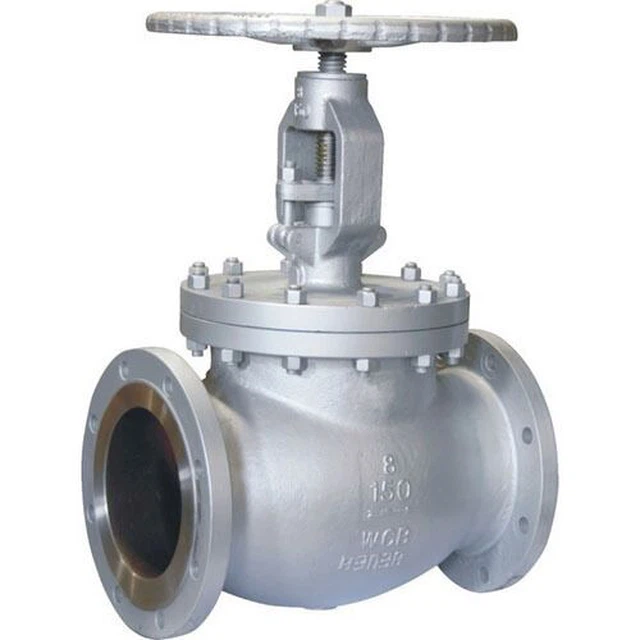
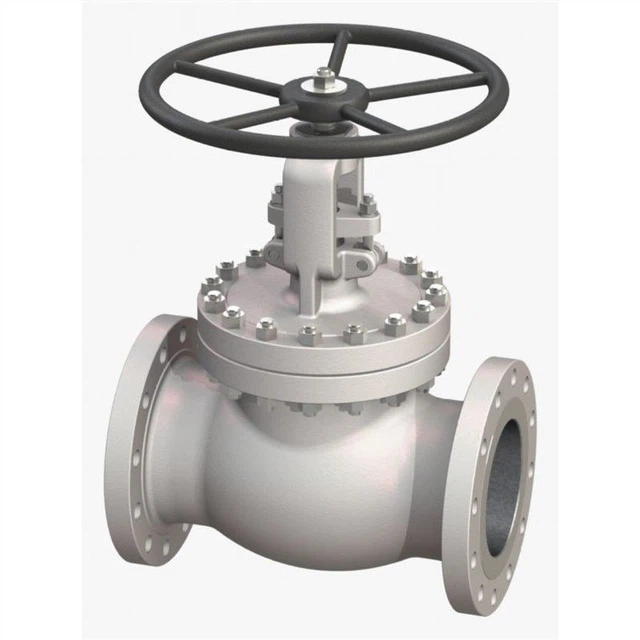
What Is Globe Valve?
A globe valve, different from ball valve, is a type of valve used for regulating flow in a pipeline, consisting of a movable plug or disc element and a stationary ring seat in a generally spherical body.
Rich experience
The company' s founder team graduated from mechanical and electrical automation majors and has been engaged in the valve industry for more than 20 years. It is committed to providing customers with a complete set of fluid control solutions. It is a company integrating scientific research and development, A large-scale valve enterprise integrating testing and testing, manufacturing and sales.
Wide product range
The company mainly produces API 6D pipeline ball valves, gate valves, globe valves, check valves, plug valves and API 609 series butterfly valves in 6 categories, with more than 1,000 specifications and varieties. Products widely cover petrochemical, coal chemical, nuclear power, LNG, marine, aerospace, metallurgy, papermaking and other industries.
Complete qualifications
The company has a complete international standardized management system, adopts the world's top precision casting technology and modern intelligent electronic detection system, and uses advanced SAP resource management, strip storage management system and ERP system to effectively manage the factory.
High standard products
After years of hard work and development, it has become a key backbone enterprise in the valve industry. It specializes in improving the innovation and manufacturing capabilities of special valves in harsh industrial environments. High-quality products and fast after-sales service have won praise and trust from customers at home and abroad.
Regulating flow
Globe valves regulate flow in piping systems. They go in the line between a pump and a tank or reservoir. The valve opens to allow flow from the pump to fill the tank, and then closes when the desired level is reached.
Controlling pressure
Globe valves fit in the line between a pump and a tank or reservoir. The valve allows flow from the pump to fill the tank and then closes once it achieves the desired pressure.
Managing temperature
Globe valves are installed in the line between a heat source and a heat exchanger. The valves’ opening and closing allow flow from the heat source to enter the exchanger which controls the temperature levels.

Globe valves are easy to operate because they only require a quarter turn to open or close. A Handle or a lever attached to the stem opens or closes the valve This makes them ideal for applications where quick operation is necessary, such as in emergency situations.
Operating and maintaining a globe valve is easier than other types of valves. Globe valves have a simple design and few moving parts, which makes them less likely to break down.
Globe valves have a lower leakage rate than other types of valves. This is because the disk in a globe valve seats more snugly against the port, which creates a tighter seal.
Unlike other types of valves, globe valves are adaptable and can function in a wider range of settings. This is due to the different sizes, materials, and pressure ratings that they come in.
Globe valves are less likely to clog than other types of valves. This is because the disk in a globe valve can be easily removed for cleaning.
Bonnet
Covers the top of the valve, providing access to internal parts.
Disc
A movable component that regulates fluid flow.
Body
The outer casing that houses the valve's internal components.
Seat
The surface against which the disc forms a seal.
Sealing arrangement
Ensures a tight seal between the stem and bonnet to prevent leakage.
Stem
Connects the actuator to the disc, allowing it to open and close.
Selection Tips and Considerations
Application and fluid compatibility
One of the first considerations when selecting a globe valve is the application and the type of fluid it will be handling. Different applications require different materials and designs to ensure optimal performance and durability. Consider factors such as the fluid's temperature, pressure, corrosiveness, and viscosity to choose the right materials and valve design.
Valve size and pressure rating
The valve size and pressure rating must match your system's requirements. Oversized or undersized globe valves can lead to inefficiencies, increased energy consumption, or even system failures.
Flow control
Globe valves are versatile when it comes to flow control. They can be used for on-off service or for throttling and regulating flow. If precise flow control is required, consider selecting a valve with a design optimized for throttling applications. Keep in mind that improper flow control can lead to excessive wear and reduced valve lifespan.
Materials of construction
Globe valves are available in various materials, including stainless steel, brass, bronze, cast iron, and more. The choice of material depends on factors like fluid compatibility, temperature, and corrosion resistance. For example, stainless steel is suitable for corrosive fluids, while bronze is often chosen for seawater applications.
Bonnet type
Globe valves have two common bonnet types: bolted bonnet and pressure seal bonnet. The choice between the two depends on the pressure and temperature requirements of your system. Pressure seal bonnets are suitable for high-pressure applications, while bolted bonnets are generally used for lower-pressure systems.
Sealing mechanism
Globe valves can have different sealing mechanisms, including globe, plug, and needle. The choice of sealing mechanism affects the valve's ability to provide a tight shut-off and control the flow accurately. Consider the level of leakage tolerance acceptable for your application and choose the appropriate sealing mechanism accordingly.
Actuation
Globe valves can be operated manually, pneumatically, electrically, or hydraulically. The choice of actuation depends on factors like the valve's size, accessibility, and the need for remote control. For large or hard-to-reach valves, automated actuation systems may be necessary for convenience and efficiency.
Maintenance and accessibility
Globe valves, like all mechanical equipment, require regular maintenance. Consider ease of access for maintenance when selecting a valve. Valves with readily accessible components and spare parts availability can reduce downtime and maintenance costs.
Compliance with standards
Ensure that the selected globe valve complies with relevant industry standards and certifications. Compliance with standards ensures the valve's performance, safety, and reliability in your application.
Types of Globe Valve
Z types globe valve
The simplest design and most common type is a Z-body. The Z-shaped partition inside the globular body contains the seat. The horizontal seating arrangement of the seat allows the stem and disk to travel perpendicular to the pipe axis resulting in a very high-pressure loss.
Y types globe valve
The Y-type design is a solution for the high-pressure drop problem in Z-type valves. The seat and stem are angled at approximately 45° to the pipe axis in this type. Y-body valves are used in high pressure and other critical services where pressure drop is concerned.
Angle types globe valve
The angle globe valve turns the flow direction by 90 degrees without using an elbow and one extra pipe weld. Disk open against the flow. This type of globe valve can also be used in the fluctuating flow condition, as they can handle the slugging effect.
● Be sure to turn the valves off and on once or twice a year, especially if your main shutoff is a gate valve. This simple preventative step will ensure the valves work freely when you need to cut off the supply of water into your home.
● When you've closed and then opened a gate-style shutoff valve, it may start to leak a bit around the valve stem. The stem of the valve is held in place with a packing nut. Tighten this nut just enough to stop the leak. Don't over tighten it or the valve may become difficult to turn.
● Any time you shut off the water and allow the pipes to drain, unscrew the aerators (small screens) on the ends of any affected faucets before you turn the water back on. You will prevent loosened particles of scale from clogging the aerators.

What to Do When a Shut-Off Valve Malfunctions
Stuck valve
If you simply can't turn the globe valve, which happens often with fixture shut-offs and old-fashioned main shut-offs, you may need to spray the valve with WD-40 and give it time to lubricate before trying again. It's recommended to turn valves on and off periodically and spray them with oil as needed to prevent being unable to close the valve in an emergency situation.
Partially closing valve
Sometimes you can turn the globe valve but not all the way, which will result in only a partial shut off. Since it's important to be able to shut the water completely off, you may need to replace this valve with one that works more smoothly.
Leaking valve
When you shut off the water, whether to a fixture or the main supply on the house, the water will often find another way out if the seal isn't very good. Try tightening the fittings with a pair of pliers and see if that stops the leak. If not, you may have to take the valve apart and replace the washer inside, or possibly, just replace it altogether.
Tee Pattern Globe valve design
Tee pattern globe valve design is the most common body type, with a Z-shaped diaphragm. The horizontal setting of the seat allows the stem and disk to travel perpendicular to the horizontal line. This design has the lowest coefficient of flow and higher pressure drop. They are used in severe throttling services, such as in bypass lines around a control valve. Tee-pattern Globe valves may also be used in applications where pressure drop is not a concern and throttling is required.
Angle pattern globe valves design
Angle pattern globe valves design is a modification of the basic Tee Pattern Globe valve. The ends of this Globe valve are at an angle of 90 degrees, and fluid flow occurs with a single 90 degrees turn. They have a slightly lower coefficient of flow than wye-pattern Globe valves. They are used in applications that have periods of pulsating flow because of their capability to handle the slugging effect of this type of flow.
Wye pattern globe valves design
Wye pattern globe valves design, is an alternative for the high pressure drop, inherent in Globe valves. Seat and stem are angled at approximately 45 degrees, what gives a straighter flowpath at full opening and offer the least resistance to flow. They can be cracked open for long periods without severe erosion. They are extensively used for throttling during seasonal or startup operations. They can be rod through to remove debris when used in drain lines that are normally closed.
Disk and Seat and Stem of Globe valves
Disk
The most common disk designs for Globe valves are.. ball disk, composition disk and the plug disk. Ball disk design is used primarily in low pressure and low temperature systems. It is capable of throttling flow, but in principle it is applied to stop and start flow.Composition disk design uses a hard, non-metallic insert ring on the disk, which ensures a tighter closure.Plug disk design provides better throttling than ball or composition designs. They are available in many different designs and they are all long and tapered.
Seat
Globe valve seats are either integrated or screwed in to the valve body. Many Globe valves have backseats inside the Bonnet. Back seats provides a seal between the stem and Bonnet and prevents system pressure from building against the valve pakking, when the valve is fully open. Back seats are often applied in Globe valves.
Stem
Globe valves uses two methods for connecting the disk and the stem.. the T-slot and the disk nut construction. In the T-slot design, the disk slides over the stem, while in the disk nut design, the disk is screwed into the stem.
Stem Leakage: Damaged stem seals or packing can lead to fluid leakage.
Seat and Disc Wear: Excessive wear can cause leaks and affect valve performance.
Corrosion: Parts can corrode, compromising their integrity.
Actuator Problems: Malfunctions can hinder valve operation.
Sealing Problems: Inadequate seals can lead to leaks and reduced efficiency.

Material of Globe Valve

Cast Iron:This is a common material used in commercial and industrial applications due to its durability and affordability.
Stainless steel:This material is ideal for use in applications where high corrosion resistance is required.
Brass:Brass is commonly used in low-temperature applications due to its excellent heat transfer properties.
Bronze:Bronze is an alloy of copper and tin that is resistant to seawater corrosion and is often used in marine applications.
Carbon steel:This material is ideal for high-temperature and high-pressure applications due to its strength and durability.
Alloy steel:This material is used for corrosive and high-temperature applications.
PVC:PVC is a cost-effective and lightweight option for low-pressure applications..
SUNAY is a professional manufacturer of valves. Headquartered in Anfeng Industrial Zone, Yongjia, Zhejiang. The company was established in 2010 with a registered capital of 10.8 million yuan and has three holding manufacturing companies. The company’s founder team graduated from mechanical and electrical automation majors and has been engaged in the valve industry for more than 20 years. After years of hard work and development, it has become a key backbone enterprise in the valve industry.
Q: What are the limitations of a globe valve?
Q: Should globe valve be fully open?
Q: What can go wrong with a globe valve?
Q: Why would you use a globe valve instead of a gate valve?
Q: Why do globe valves leak?
Q: Can a globe valve fail?
Q: Do globe valves restrict flow?
Q: What is an alternative to globe valve?
Q: Can globe valves be full port?
Q: How should a globe valve be installed?
Q: Where should the pressure enter a globe valve?
Q: Can globe valves throttle?
Q: How do you pressure test a globe valve?
Q: Which is better gate or globe valve?
Q: Which is better globe valve or gate valve?
Q: Which valve should never be used for flow control?
Q: Are all globe valves directional?
Q: What is the best valve for regulating flow?
Q: What is the difference between a throttling valve and a globe valve?
Q: Can globe valve be installed horizontally?
We're well-known as one of the leading globe valve manufacturers and suppliers in China. We warmly welcome you to buy or wholesale customized globe valve at competitive price from our factory. Contact us for more details.
Y-Type Globe Valve