


Why Choose Us?
Broad Market
The company actively participates in the Belt and Road economic construction initiated by the country, and its products are exported to more than 30 countries and regions such as Europe, North America, the Middle East, Southeast Asia, and Africa. High-quality products and fast after-sales service have won praise and trust from customers at home and abroad.
Rich experience
The company's founder team graduated from mechanical and electrical automation majors and has been engaged in the valve industry for more than 20 years. After years of hard work and development, it has become a key backbone enterprise in the valve industry. It specializes in improving the innovation and manufacturing capabilities of special valves in harsh industrial environments.
Wide product range
The company mainly produces API 6D pipeline ball valves, gate valves, globe valves, check valves, plug valves and API 609 series butterfly valves in 6 categories, with more than 1,000 specifications and varieties. Products widely cover petrochemical, coal chemical, nuclear power, LNG, marine, aerospace, metallurgy, papermaking and other industries.
Complete qualifications
The company has a complete international standardized management system, adopts the world's top precision casting technology and modern intelligent electronic detection system, and uses advanced SAP resource management, strip storage management system and ERP system to effectively manage the factory.
A three-way flange ball valve is a valve type with three ports, also known as openings. The connection between the ports has a metal ball with openings to control the media's flow direction. Fluid or gas (media) flows through the valve, and there's a mechanism to turn the ball, which directs flow from one place to another.

Material Structure: A216 WCB, A351 CF8,A351 CF8M; Working Pressure: CLASS:150LB, 300LB, 600LB.900LB, 1500LB, 2500LB

Cast Steel Trunnion Ball Valve
Material Structure: A216 WCB, A351 CF8, A351 CF8M; Working Pressure: CLASS:150LB, 300LB, 600LB.900LB, 1500LB, 2500LB

Forged Steel Trunnion Ball Valve
Material Structure: A105, LF2, F304, F316, F11, F22; Working Pressure: Rating: 150 Lbs. to 2500 Lbs. Nominal Diameter: NPS2~32", DN50~800mm

Material Structure: A216 WCB A351 CF8 CF8M,A352 LCB; Working Pressure: Rating: 150 Lbs. to 2500 Lbs. Nominal Diameter: NPS2~32", DN50~800mm

Metal Seal Floating Ball Valve
Material: Carbon Steel, Stainless Steel, Alloy Steel, Duplex, Superduplex, Inconel, Monel etc; Size: DN15~DN250; 1/2″~10″; Pressure Class150LB~2500LB

Material Structure: SS304, SS316, SS304L, SS316L; Working Pressure: 1000WOG, 2000WOG,1000PSI; Nominal Diameter: NPS1/2~2", DN15~50mm;
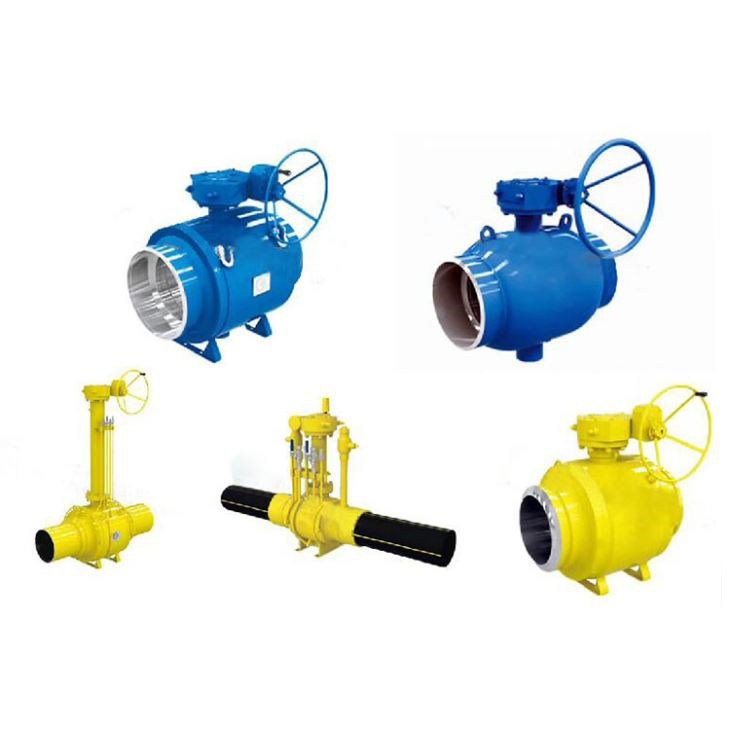
Fully Welded Trunnion Ball Valve
Material Structure: A105, LF2, F304, F316, F11, F22; Working Pressure: Rating: 150 Lbs. to 2500 Lbs. Nominal Diameter: NPS2~32", DN50~800mm

Material Structure: WCB, CF8M, CF8M, A105, LF2, F304, F316, F11, F22; Working Pressure: Rating: 150 Lbs. to 2500 Lbs.

Metal Seal Trunnion Ball Valve
Material Structure: WCB, A105, LF2, F304, F316, F11, F22; Working Pressure: Rating: 150 Lbs. to 2500 Lbs. Nominal Diameter: NPS2~32", DN50~800mm
Benefits of Three-way Flange Ball Valve
Direction of flow
The L- port allows the fluid flow to be redirected in one direction or the other. The valve ball has a central orifice that aligns with one of the two inlet/outlet orifices, allowing flow in a specific direction.
Versatility
These valves offer versatility in flow control by allowing the flow to be adjusted through different combinations of opening and closing the inlet/outlet ports.
Hermetic sealing
3-way ball valves with L-port guarantee hermetic sealing when closed, preventing leakage and ensuring precise flow control.
Three-way ball valves consist of several major components that work together to control fluid flow. The valve body contains ports to regulate fluid movement along various pipelines. The ball, which commonly made of stainless steel. Plastic or brass, sits within the valve body and rotates to direct flow through the different ports. There are typically two or three seats. Which made of an elastomeric material, that encircle the ball and create a tight seal that prevents leaks. The stem assembly connects the handle to the ball and is responsible for actuating the opening and closing of the valve. Actuators may also install on the valve to provide remote control operation.
Other valve accessories, such as mounting brackets, locking devices and limit switches, may also be added to increase valve safety and improve system performance. The components of three-way ball valves work in collaboration to ensure smooth and efficient fluid control by regulating the flow rate and direction of the fluid. By understanding the functionalities of each component, you can make the right choice when selecting the best three-way ball valve for your application.
The valve handle or lever has three positions on the three ports. Turn the handle to the appropriate position depending on your desired flow.
Position 1: In this position, the valve connects Port A to Port B. It allows fluid flow between them.
Position 2: The valve connects Port A to Port C. It diverts the fluid flow from Port B to Port C.
Position 3: In this position, the valve closes off Port B and Port C. It stops the fluid flow altogether.
Choose the valve position that suits your desired operation.
The 3-way ball valve offers piping application control, much as multi-port ball valves. Depending on the kind, its mechanism varies slightly since it operates by either turning a handle or activating an actuator (for 3-way electric ball valves, this is the case).
The multiport valve's internal ball rotates as a result, aligning the channels with the intake and exit ports to direct the flow of liquid or gas. There is variation in the range of motion of the handles according on their type.
A 3-way control valve shuts off water flow in one pipe while opening water flow in another pipe. In a modulating or 3-point floating application the valve can also mix water from two different pipes into one pipe or divert water from one pipe into two different pipes.
Connected to the Building Automation System and thermostats located in each zone, the 3-way valve directs the heating or cooling water through the coil if heating or cooling is required. If the zone does not need heating or cooling the flow is directed through the bypass line to the return piping. This means the flowrate will stay the same if you use 3-way valves in a system. In comparison a 2-way valve can stop water flow to the coil when there is no need for heating or cooling. This means the flowrate will vary if you use 2-way valves in a system.
The 3-Way Ball Valve Mixing Station is a chemical proportioner that properly dilutes three chemical concentrations to the necessary ratios and fills any sized container with diluted, ready-to-use chemical solutions.
A 3-way control valve stops water flow in one pipe while allowing it to flow in another. The valve can also combine water from two distinct pipes into one pipe or redirect water from one pipe into two different pipes in a modulating or three-point floating application.
Why Use a Three-way Flange Ball Valve?
● Smaller "footprint" in a system.
● No need for additional piping tee.
● Easy replacement in existing systems using 3-port valve.
2-Port relief valves require a piping tee for by-pass and relief applications, but not for backpressure or anti-siphon applications. Unlike three-port style valves which are placed directly in-line and cause a drop in both pressure and flow, a valve "teed" off the line usually offers the best system design and ease of maintenance.
In most relief and by-pass applications, 3-port valves do not perform as well as 2-port valves installed on a tee. No 3-port relief valve is suitable for use as a backpressure regulator or anti-siphon valve, and no 3-port relief valve will deliver the flow and performance of a 2-port relief valve.
Mixing valves are alternate names used for T-pattern flow ball valves. This is because this valve design is widely used to mix or combine flow coming two different sources. Ordinary manual three-way T-pattern ball valves used as mixing valves are usually installed with the bottom port of the valve body as the common outlet port.
Like the L-pattern flow ball valves, each 90-degree turn of the handle changes the flow path through the valve. And like the L-pattern flow valves, the turns of the handle may be limited by design using handle stops.
A T-pattern flow horizontal type three-way ball valve has four possible flow paths. Notice that each flow pattern change, from left to right, each represents one 90-degree counterclockwise turn of the handle. Each turn of the handle causes a corresponding 90-degree turn of the valve ball.
Before Repairing the Three-way Flange Ball Valve: How to Know if It Has Failed?
These symptoms are
Hot heating pipes when we open the DHW
The easiest way to check for V3V problems is to turn off the heat and wait for it to cool down. Then we turn on the domestic hot water but not the heating. If the flow pipe from the boiler to the radiators gets hot, it is a sign that the 3-way valve is faulty.
Hot radiators with heating off
When we turn on the domestic hot water, the radiators heat up even if the heating is off. This occurs because the function of the 3-way valve is to manage the heating installation and the domestic hot water installation separately. If this valve fails, these facilities come into contact, or as they say, "communicate" and conflict. This can happen even if the 3-way valve is left open a minimum.
The hot water does not come out hot but lukewarm
That the hot water does not reach the selected temperature also occurs as a result of the heating and DHW circuits being connected. As a good part of the calorific power escapes towards the heating circuit, the hot water comes out lukewarm through the taps and showers, or it may even surprise us by suddenly getting cold while we shower.
There is hot water but no heating even if it is turned on
This happens when the 3-way valve in diverter function gets stuck in the hot water function, and although there is a demand for heating, it directs the hot water to the taps and showers instead of to the radiators.
You have to have the heating on for there to be DHW
It is the opposite case to the previous one. The 3-way valve in the diverter function got stuck in the heating function. If the seasons have come where we leave the heat off, and you notice that you don't get hot water unless you also turn the heat on, that probably means the three-way valve is bad.
Installing a 3-way ball valve seems tricky, but it can be easy with the right tools and steps. Here's a step-by-step guide on how to install a 3-way ball valve:
Shut off the water supply. Turn off the main water supply before starting any plumbing project.
Cut the pipes. Cut the pipes where you want to install the valve. Be sure to leave enough space for the valve and fittings to be installed.
Install the fittings. Install the fittings on both ends of the pipes. Use the appropriate type of fitting for your piping material.
Apply Teflon tape. Wrap Teflon tape around the threads of the ball valve. It will help create a tight seal and prevent leaks.
Install the ball valve. Screw the ball valve onto the fittings. Use a wrench to tighten the valve, but be careful not to over-tighten and damage the threads.
Apply thread sealant. Apply thread sealant to the threads of the fittings and the ball valve. It will further prevent leaks and ensure a tight seal.
Turn on the water supply. Turn the main water supply back on and test the valve for leaks.
Our Factory
SUNAY is a professional manufacturer of valves. Headquartered in Anfeng Industrial Zone, Yongjia, Zhejiang. The company was established in 2010 with a registered capital of 10.8 million yuan and has three holding manufacturing companies. The company mainly produces API 6D pipeline ball valves, gate valves, globe valves, check valves, plug valves and API 609 series butterfly valves in 6 categories, with more than 1,000 specifications and varieties.


The company insists on taking scientific and technological innovation as the forerunner of enterprise development, setting up AUTO CAD valve design center, 3D simulation manufacturing design system, valve testing center and special equipment valve test platform.
The company actively participates in the Belt and Road economic construction initiated by the country, and its products are exported to more than 30 countries and regions such as Europe, North America, the Middle East, Southeast Asia, and Africa. High-quality products and fast after-sales service have won praise and trust from customers at home and abroad.
The company adheres to the enterprise spirit of "harmony, humility, truth-seeking, pragmatism, and innovation", and the market-centric business philosophy, and continues to provide customers with the most complete services.


Ultimate FAQ Guide to Three-way Flange Ball Valve
Hot Tags: three-way flange ball valve, China three-way flange ball valve manufacturers, suppliers, factory, 4 inch 3 way valve, 12 volt ball valve, fp ball valve, steam ball valve, ss ball valve, trunnion mounted ball valve


