


What is Screwed Ball Valve
A screwed ball valve is a type of quarter-turn rotary valve that uses a spherical closure element with a hollow, perforated center to control the flow of fluid through a pipeline. The term "screwed" refers to the connection method where the valve body is threaded to allow it to be attached to the piping system. This design facilitates the installation and removal of the valve without the need for welding or flanging, making it a versatile option for various applications.The internal mechanism consists of a ball with a port, equal to the pipe diameter, that aligns with the flow when the valve handle is turned 0 degrees (in the open position) and blocks the flow when the handle is turned 90 degrees (in the closed position). The ball is typically held in place by a stem that passes through the body of the valve.
Why Choose Us?
Rich experience
The company' s founder team graduated from mechanical and electrical automation majors and has been engaged in the valve industry for more than 20 years. It is committed to providing customers with a complete set of fluid control solutions. It is a company integrating scientific research and development, A large-scale valve enterprise integrating testing and testing, manufacturing and sales.
Wide product range
The company mainly produces API 6D pipeline ball valves, gate valves, globe valves, check valves, plug valves and API 609 series butterfly valves in 6 categories, with more than 1,000 specifications and varieties. Products widely cover petrochemical, coal chemical, nuclear power, LNG, marine, aerospace, metallurgy, papermaking and other industries.
Complete qualifications
The company has a complete international standardized management system, adopts the world's top precision casting technology and modern intelligent electronic detection system, and uses advanced SAP resource management, strip storage management system and ERP system to effectively manage the factory.
High standard products
After years of hard work and development, it has become a key backbone enterprise in the valve industry. It specializes in improving the innovation and manufacturing capabilities of special valves in harsh industrial environments. High-quality products and fast after-sales service have won praise and trust from customers at home and abroad.


Benefits of Screwed Ball Valve
Ease of Installation
Screwed connections allow for quick and straightforward installation and removal, eliminating the need for welding, brazing, or extensive preparation. This can save time and labor costs during both initial setup and future maintenance.
Versatility
Suitable for a wide range of applications, including water, oil, gas, and chemical services, due to the availability of various materials and sealing options that can handle different fluids and pressures.
Reliability
The quarter-turn mechanism provides a positive shut-off, ensuring that the valve either fully opens or completely closes, preventing the passage of fluid even in low-flow conditions.With few moving parts and no rubbing or sliding action within the valve, screwed ball valves often exhibit excellent durability and resistance to wear, leading to a longer operational life.
Low Torque Operation
Screwed ball valves require less effort to operate than other types of valves, making them ideal for manual actuation and reducing operator fatigue.The valve's handle position directly indicates the valve's status-perpendicular to the flow path for closed and parallel for open-providing clear operational feedback.
Maintenance
Minimal maintenance is required for screwed ball valves, and they are typically easy to service or replace if needed, contributing to lower long-term ownership costs.When constructed from corrosion-resistant materials, such as stainless steel or PVC, screwed ball valves can be used in environments where exposure to corrosive substances is a concern.
Cost-Effectiveness
The combination of ease of installation, durability, and low maintenance requirements makes screwed ball valves a cost-effective solution for many fluid control applications.
Components of Screwed Ball Valve
Body of the Valve: This is the most vital part of the valve since it houses all of the control components. Offers maximum protection to all the valve components to ensure they function effectively.
Rotary Ball: The key feature of ball valves that distinguishes them from other valve types is a ball with a center hole through which the medium flows. The entrance and outlet are connected by a hole in the ball that runs across one axis. The ball's direction is controlled by the Stem. The ball can be free-floating or attached to a trunnion. The working torque of trunnion-mounted ball valves is about 2/3 that of floating ball valves.
Stem: The ball is now connected to the external control mechanism. The stem of a manual ball valve, for example, is connected to a handle or lever.
Seats: The discs that sit between the body and the ball are called intervertebral discs. Seats act as a barrier between the two, as well as provide support for the ball.
Power Source: The stem of the ball valve is rotated by manual or triggered power sources. Operator-controlled levers and handles are examples of manual actuation. There are other automated power sources like electric, pneumatic, and hydraulic actuation.
Packing: This is a seal that keeps the media from escaping around the stem.
Bonnet: The bonnet is visible in the ball valve's body hole. At the second stage, the bonnet is employed to cover this opening and, like the body, it acts as a pressure boundary. To complete the task, the bonnet keeps the ball and stem assembly in place, and its cap is connected to the body.
Screwed Ball Valve Features
Quarter-Turn Operation
The valve operates with a quick quarter-turn of the handle, which makes it easy to operate and provides a distinct visual indication of the valve's position-open or closed.
01
Tight Seal
When the ball is rotated to the closed position, the perforated section is pressed against a seat, creating a tight seal that prevents the flow of fluid.
02
Flow Characteristics
Screwed ball valves can have different types of flow characteristics, such as straight-through, reduced bore, or full port, depending on the design of the ball and the internal passageway.
03
Pressure Rating
These valves are available in various pressure ratings, allowing them to be used in low-pressure residential systems as well as high-pressure industrial applications.
04
Material Options
The valve body and ball can be made from a variety of materials, including brass, stainless steel, PVC, or other alloys, to accommodate different fluid types and environmental conditions.
05
Threaded Ball Valve Material Specifications
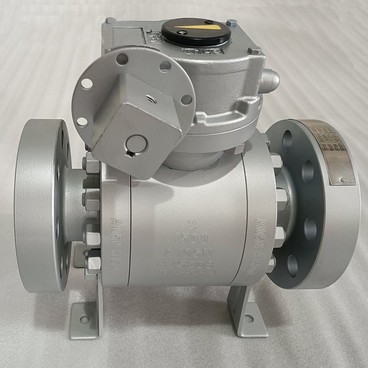
Stainless Steel
Stainless steel is a popular material for ball valves due to its strength, corrosion resistance, and durability. Common grades include 304 and 316 stainless steel, which have different levels of corrosion resistance.

Brass
Brass is an economical option for ball valves and is often used in low-pressure applications. It has good corrosion resistance and is easy to machine.

Bronze
Bronze is a strong and durable material that is often used in marine applications due to its resistance to seawater corrosion. Common grades include C83600 and C95800.

Carbon Steel
Carbon steel is a strong and durable material that is commonly used in high-pressure applications. It is available in a variety of grades, including ASTM A216 and ASTM A105.

PVC
PVC is a lightweight and cost-effective material that is commonly used in low-pressure applications. It is available in a variety of grades, including Schedule 40 and Schedule 80.

CPVC
CPVC is a thermoplastic material that is often used in chemical processing applications due to its chemical resistance. It is available in a variety of grades, including Schedule 40 and Schedule 80.

PTFE
PTFE (polytetrafluorethylene) is a highly chemical-resistant material that is often used for ball valve seats and seals. It is available in a variety of grades, including Virgin PTFE and Glass-Filled

PTFE
Hastelloy: Hastelloy is a highly corrosion-resistant material that is often used in harsh chemical and high-temperature applications. Common grades include C22, C276, and B2.
What are the Applications of Screwed Ball Valve
Corrosive fluid applications: For applications involving corrosive fluids, ball valves must be made of materials that are resistant to corrosion, such as stainless steel or special alloys. The valve must also be designed to withstand the corrosive properties of the fluid and prevent leakage.
High-pressure applications: In high-pressure applications, ball valves must be designed to withstand the high pressure and prevent leakage. They must have a high-pressure rating and use materials that can withstand the high-pressure conditions.
High-temperature applications: In high-temperature applications, ball valves must be designed to withstand the high temperature and prevent damage or failure. They must have a high-temperature rating and use materials that can withstand the high-temperature conditions.
Sanitary applications: For applications involving food, beverage, or pharmaceuticals, ball valves must meet strict sanitary requirements to prevent contamination. They must be designed for easy cleaning and sterilization and meet relevant regulatory standards, such as FDA and 3A.
Hazardous area applications: In hazardous area applications, ball valves must meet specific safety standards to prevent ignition or explosion. They must be designed with appropriate materials, coatings, and certifications, such as ATEX or IECEx.
Cryogenic applications: In cryogenic applications, ball valves must be designed to withstand the low temperature and prevent leakage. They must have a low-temperature rating and use materials that can withstand the low-temperature conditions.
Flow control applications: For applications requiring precise flow control, ball valves must have a V-port or other specialized design to enable accurate flow regulation. They may also require specialized actuators or controllers to optimize flow control.
How to Maintain Screwed Ball Valve

Proper installation
Screwed ball valves that are installed correctly have a much lower chance of needing repairs or replacement. Make sure the engineer installing your valves is experienced and knowledgeable in ball valve installation and maintenance.
Regular cleanings
Clean valves last longer, since there's little chance for debris to build up and negatively impact the performance of your piping system. Use a towel to wipe dirt, oil or dust from the valve casing and a wire brush to clear any build-up from the valve stem or other moving parts. Be sure you use cleaning agents that won't react negatively with the valve materials: Gas-based or compressed air cleaners work well for metal components, and alcohol- or water-based cleaners are ideal for non-metal parts. Clean your screwed ball valves at least once a year, and more frequently if the plant environment contains lots of dirt or dust.


Valve lubrication
Lubrication keeps your screwed ball valves operating smoothly and prevents abrasion. Lubrication also helps increase the effectiveness of the valve seals, provided it's applied properly. Stick to synthetic, water-insoluble, oil-based lubricants; avoid any clay- or solid-based lubricants that may build up inside the valve cavity. Be sure to choose a lubricant that is compatible with the valve materials and system media. Many manufacturers (such as Gemini Valve) permanently lubricate their screwed ball valves before shipment, meaning that additional lubrication later in the valve's life is unnecessary.
Routine inspections
Have your valves checked by a skilled inspector on a routine basis. For most applications, once a year is ideal, but screwed ball valves in high-pressure and high-cycle applications should receive more frequent inspections. Inspections should address the following:Tightness of nuts, bolts and other hardware.The presence of mineral buildup or corrosion
Steps to Correctly Install Threaded Ball Valves
Examine the ports, seating surfaces, and threads of the screwed ball valve to ensure they are clean and free of extraneous debris.Change the valve's position from fully open to fully closed.
Make sure the threaded pipe connection that is screwed into the valve is properly screwed in, clean, and free of debris and metal debris.
Apply high-quality pipe thread sealant or PTFE thread sealing tape as directed by the manufacturer's application to ensure a leak-free seal on the pipe joint.
Valves and pipelines must be aligned to avoid thread crossings. The male thread must be aligned with the thread axis. Maintaining the correct pipe orientation during assembly prevents unnecessary stress on the valve body. By connecting the pipe, the valve and the pipe are supported in a straight line so that unnecessary stress is not applied to the valve body.
When putting in two-piece frame screwed ball valves constantly use wrenches while making up pipe joints to those valves. Position one wrench at the valve ceases closest to the pipe joint being tightened and the alternative wrench onto the pipe to save you transmitting torque via the valve frame joint, among the valve frame and tailpiece.
Tighten until the joint begins to feel and the fitting is almost in the desired direction. Next, increase the tightening force a little. It will move less with each attempt, so it will continue to pull until it is properly aligned and successfully connected.

Applicationl: The first consideration when selecting a ball valve is the application in which it will be used. Consider factors such as the type of fluid being transported, the pressure and temperature of the fluid, and the flow rate required.
Material:The material of the valve is also an important consideration. Choose a material that is compatible with the fluid being transported and can withstand the operating conditions of the system. Common materials include stainless steel, brass, and PVC.
Size:The size of the valve should be chosen based on the diameter of the piping system in which it will be installed. A valve that is too small may restrict flow, while a valve that is too large may be inefficient and costly.
Type of ball valve:Consider the type of ball valve that will best suit your application. A full port ball valve may be best for high flow applications, while a V-port ball valve may be more suitable for precise flow control.
End connections:The end connections of the valve must match the piping system in which it will be installed. Common end connections include threaded, flanged, and socket weld.
Operating conditions:Consider the operating conditions of the system, including the pressure and temperature range, as well as any potential shock or vibration that the valve may experience.
Certification:If the valve will be used in an industry that requires certification, such as food and beverage or pharmaceuticals, ensure that the valve meets the necessary standards and certifications.
Our Factory
SUNAY is a professional manufacturer of valves. Headquartered in Anfeng Industrial Zone, Yongjia, Zhejiang. The company was established in 2010 with a registered capital of 10.8 million yuan and has three holding manufacturing companies. The company's founder team graduated from mechanical and electrical automation majors and has been engaged in the valve industry for more than 20 years. After years of hard work and development, it has become a key backbone enterprise in the valve industry. It specializes in improving the innovation and manufacturing capabilities of special valves in harsh industrial environments. It is committed to providing customers with a complete set of fluid control solutions. It is a company integrating scientific research and development, A large-scale valve enterprise integrating testing and testing, manufacturing and sales.The company mainly produces API 6D pipeline ball valves, gate valves, globe valves, check valves, plug valves and API 609 series butterfly valves in 6 categories, with more than 1,000 specifications and varieties.


FAQ
Hot Tags: screwed ball valve, China screwed ball valve manufacturers, suppliers, factory, bottom feed ball valve, y ball valve, 3 pc ball valve, sanitary ball check valve, ppr ball valve, iron ball valve


