


Hey there! As a supplier of non - return valves, I often get asked about the flow rate capacity of these essential components. So, let's dive right in and break down what the flow rate capacity of a non - return valve really means.
First off, what exactly is a non - return valve? Well, it's a type of valve that allows fluid (that could be liquid or gas) to flow in only one direction. It's like a one - way street for fluids. If the fluid tries to flow in the opposite direction, the valve shuts close, preventing backflow. This simple yet crucial function makes non - return valves super important in a whole bunch of industries, from water treatment plants to oil and gas refineries.
Now, onto the flow rate capacity. The flow rate capacity of a non - return valve refers to the maximum amount of fluid that can pass through the valve in a given period of time. It's usually measured in units like cubic meters per hour (m³/h) for liquids or cubic feet per minute (CFM) for gases.
There are several factors that can affect the flow rate capacity of a non - return valve. One of the most significant factors is the size of the valve. Just like a bigger pipe can carry more water than a smaller one, a larger non - return valve generally has a higher flow rate capacity. For example, a 6 - inch non - return valve will typically allow more fluid to pass through than a 2 - inch one.
The design of the valve also plays a huge role. Different types of non - return valves have different flow characteristics. Let's take a look at some common types:
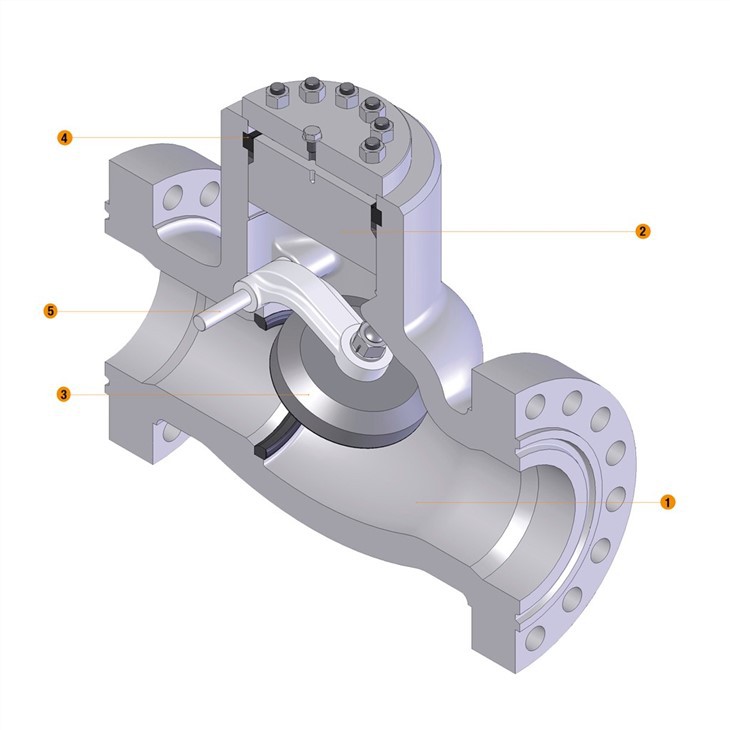
The Swing Check Valve is one of the most widely used non - return valves. It has a disc that swings on a hinge. When the fluid flows in the correct direction, the disc swings open, allowing the fluid to pass. When the flow reverses, the disc swings back and seals the valve. Swing check valves are known for their relatively high flow rate capacity, especially in larger sizes. They are great for applications where a large volume of fluid needs to flow through the valve.
Another type is the Double Disc Swing Check Valve. As the name suggests, it has two discs instead of one. This design allows for a more compact valve while still maintaining a good flow rate capacity. Double disc swing check valves are often used in applications where space is limited but a decent flow rate is still required.
The Pressure Seat Swing Check Valve is designed to provide a tight seal under high - pressure conditions. The seat of the valve is designed to be pressed against the disc by the pressure of the fluid, ensuring a leak - free operation. While it may have a slightly lower flow rate capacity compared to some other types in certain situations, it excels in high - pressure applications where preventing backflow is of utmost importance.
The fluid properties also matter a lot. Viscosity, for instance, can have a big impact on the flow rate capacity. A more viscous fluid, like honey, will flow through a non - return valve more slowly than a less viscous fluid, like water. Temperature can also affect the fluid's properties and, in turn, the flow rate. For example, as the temperature of a liquid increases, its viscosity usually decreases, which can increase the flow rate through the valve.
The pressure differential across the valve is another key factor. The greater the pressure difference between the inlet and the outlet of the valve, the higher the flow rate will be. However, there's a limit to this. If the pressure differential is too high, it can cause problems like valve flutter or damage to the valve components.
When it comes to calculating the flow rate capacity of a non - return valve, it's not always a straightforward process. There are some standard equations and methods that engineers use, but these often require a lot of detailed information about the valve, the fluid, and the system it's installed in. In many cases, manufacturers will provide flow rate capacity charts or curves for their valves based on testing. These charts can give you a good idea of how much fluid the valve can handle under different conditions.
As a non - return valve supplier, I've seen firsthand how important it is to choose the right valve with the appropriate flow rate capacity for a specific application. If the flow rate capacity is too low, it can lead to restricted flow, which can cause inefficiencies in the system. On the other hand, if the flow rate capacity is too high, you might end up spending more money on a larger valve than you actually need.

So, if you're in the market for a non - return valve, it's crucial to consider all these factors. Think about the size of the valve, the type of design that will work best for your application, the properties of the fluid, and the pressure conditions. And if you're not sure, don't hesitate to reach out to us. We have a team of experts who can help you select the right non - return valve with the optimal flow rate capacity for your specific needs. Whether you're working on a small - scale project or a large industrial application, we've got you covered.
If you're interested in discussing your non - return valve requirements further or want to get a quote, feel free to get in touch. We're always here to help you make the best choice for your system.
References
- "Valve Handbook: A Guide to Valve Selection and Sizing"
- Industry standards and guidelines related to non - return valves
- Manufacturer's technical documentation for non - return valves