


Can ANSI Globe Valves be automated?
Hey there! I'm a supplier of ANSI Globe Valves, and I often get asked this question: Can ANSI Globe Valves be automated? Well, the short answer is yes, they definitely can. Let's dig deeper into this topic and see how it all works.
First off, let's understand what ANSI Globe Valves are. ANSI, which stands for the American National Standards Institute, sets the standards for these valves. ANSI Globe Valve are widely used in various industries like oil and gas, chemical, and power generation. They're known for their excellent shut - off capabilities and precise flow control. The design of a globe valve has a movable disk that can be adjusted to regulate the flow of fluid through the valve.
Now, why would someone want to automate an ANSI Globe Valve? There are several good reasons. In large - scale industrial operations, manual valve operation can be time - consuming and labor - intensive. Automated valves can be controlled remotely, which means operators can adjust the valve settings from a control room without having to be physically present at the valve location. This is especially useful in hazardous environments where it might be dangerous for workers to access the valves directly.
Another advantage of automation is the ability to achieve more precise and consistent control. Automated systems can be programmed to open or close the valve at specific flow rates or pressures, ensuring that the process operates within the desired parameters. This can lead to improved efficiency, reduced waste, and better overall product quality.

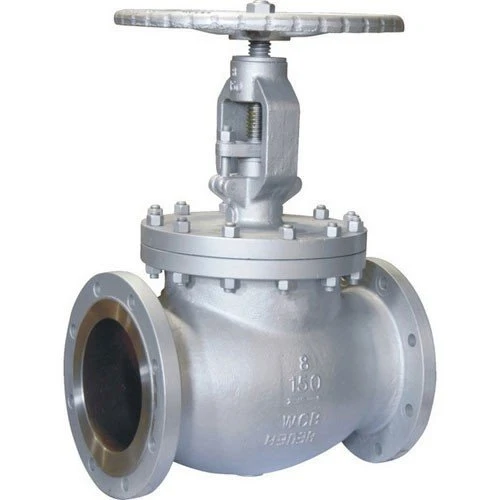
So, how can we automate an ANSI Globe Valve? There are a few common methods. One of the most popular ways is by using an electric actuator. An electric actuator is a device that converts electrical energy into mechanical motion. It can be attached to the valve stem of the ANSI Globe Valve. When an electrical signal is sent to the actuator, it moves the valve stem up or down, opening or closing the valve accordingly. Electric actuators are relatively easy to install and can be integrated with existing control systems. They're also suitable for applications where a high degree of accuracy is required.
Pneumatic actuators are another option. These actuators use compressed air to generate the force needed to operate the valve. Pneumatic actuators are known for their fast response times and high - torque capabilities. They're often used in applications where quick valve operation is necessary, such as in emergency shutdown systems. The compressed air can be easily supplied from an existing air network in the industrial facility, making them a cost - effective choice in many cases.
Hydraulic actuators are also available for valve automation. Hydraulic actuators use a fluid, usually oil, to transmit force. They can generate very high forces, which makes them suitable for large - sized ANSI Globe Valves or applications where a lot of force is required to open or close the valve. However, hydraulic systems are more complex and require more maintenance compared to electric or pneumatic actuators.
When it comes to choosing the right actuator for an ANSI Globe Valve, several factors need to be considered. The size and type of the valve are important. Larger valves may require more powerful actuators to operate effectively. The operating conditions, such as the pressure and temperature of the fluid flowing through the valve, also play a role. For example, in high - temperature applications, the actuator needs to be able to withstand the heat without losing its functionality.
The control requirements of the system are another crucial factor. If the valve needs to be opened or closed gradually, an actuator with a proportional control feature may be required. On the other hand, if the valve only needs to be in either a fully open or fully closed position, a simpler on - off actuator may be sufficient.
Let's talk a bit about the different types of ANSI Globe Valves that can be automated. Globe Stop Valve is a common type. These valves are mainly used for on - off service, where the flow needs to be completely stopped or started. Automation can make it easier to control the opening and closing of these valves, ensuring a tight shut - off when needed.
Flange Golbe Valve are also widely used. Flange connections provide a secure and leak - proof way to install the valve in a pipeline. When automating a flange globe valve, it's important to ensure that the actuator is properly aligned with the valve and that the connection between the actuator and the valve is strong enough to withstand the operating forces.
There are, of course, some challenges associated with automating ANSI Globe Valves. One of the main challenges is the cost. The cost of the actuator, along with the installation and integration of the automation system, can be significant. However, it's important to consider the long - term benefits, such as increased efficiency and reduced labor costs, which can often offset the initial investment.
Maintenance is another aspect that needs to be taken into account. Automated valves require regular maintenance to ensure that they continue to operate properly. This may involve checking the actuator for wear and tear, lubricating moving parts, and testing the control system to make sure it's functioning correctly.
In conclusion, ANSI Globe Valves can definitely be automated, and there are many good reasons to do so. Whether it's for safety, efficiency, or better process control, automation can bring a lot of benefits to the table. As a supplier of ANSI Globe Valves, I can offer a wide range of valves and automation solutions to meet your specific needs. If you're interested in learning more about automating your ANSI Globe Valves or have any questions about our products, I encourage you to reach out for a purchase negotiation. We're here to help you find the best solution for your industrial processes.
References:
- Industrial Valve Handbook, various editions
- Manufacturer's documentation on ANSI Globe Valves and actuators