


As a supplier of 2 Pcs Ball Valves, I've had extensive experience with these products. While 2 Pcs Ball Valves have their merits, it's important to be transparent about their disadvantages. This knowledge can help customers make more informed decisions when choosing the right valve for their specific applications.
High Initial Cost
One of the primary drawbacks of 2 Pcs Ball Valves is their relatively high initial cost. Compared to some other types of valves, such as gate valves or globe valves, 2 Pcs Ball Valves are often more expensive to purchase. This is due in part to the materials used in their construction. High - quality stainless steel or other corrosion - resistant alloys are commonly employed to ensure durability and reliable performance. The manufacturing process also contributes to the cost. Precision machining is required to create the ball and the valve body, ensuring a tight seal and smooth operation. For small - scale projects or applications with budget constraints, the higher upfront investment in 2 Pcs Ball Valves can be a significant deterrent.
Limited Flow Control Precision
2 Pcs Ball Valves are typically designed for on - off applications. They are excellent at fully opening or fully closing the flow of fluid, but they are not well - suited for precise flow control. The ball in a 2 Pcs Ball Valve rotates a quarter - turn between the open and closed positions. This binary operation makes it difficult to regulate the flow rate with high accuracy. In applications where precise control of fluid flow, such as in chemical dosing systems or some industrial processes, other types of valves like needle valves or control valves may be more appropriate. The lack of fine - tuning capabilities in 2 Pcs Ball Valves can lead to inefficiencies in systems that require strict flow regulation.
Potential for Cavitation
Cavitation is a phenomenon that can occur in 2 Pcs Ball Valves under certain conditions. When the fluid velocity through the valve is high and the pressure drops significantly, vapor bubbles can form in the liquid. These bubbles then collapse when they enter a region of higher pressure, creating shock waves that can damage the valve components. The design of 2 Pcs Ball Valves, with a relatively sudden change in flow path when the valve is opened or closed, can exacerbate the risk of cavitation. Cavitation can cause pitting and erosion on the ball and seat surfaces, leading to leaks and reduced valve lifespan. In applications where the fluid has a high velocity or there are large pressure differentials, additional measures such as using anti - cavitation trims or selecting a valve with a more gradual flow path design may be necessary.
Maintenance Complexity
Maintaining 2 Pcs Ball Valves can be more complex compared to some other valve types. The internal components, such as the ball and the seat, require regular inspection and cleaning to ensure proper operation. If the valve is used in a dirty or corrosive environment, debris and contaminants can accumulate on the ball and seat, causing the valve to stick or leak. Disassembling a 2 Pcs Ball Valve for maintenance can be a time - consuming process, as it often involves removing multiple parts and ensuring proper alignment during reassembly. Additionally, if the seat or ball is damaged, replacement parts may need to be sourced, which can be costly and may require some technical expertise to install correctly.

Size and Weight Limitations
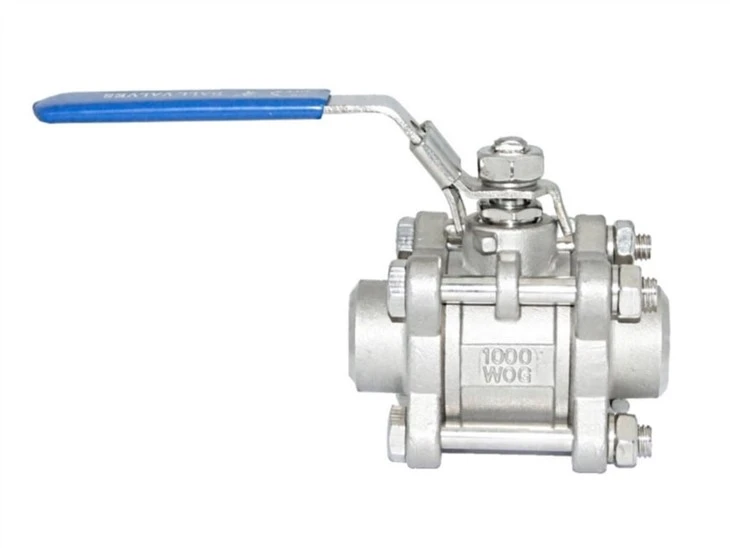
2 Pcs Ball Valves can be relatively large and heavy, especially in larger sizes. This can pose challenges in applications where space is limited or where weight is a concern. For example, in offshore platforms or mobile equipment, the size and weight of the valves can impact the overall design and functionality of the system. The large footprint of 2 Pcs Ball Valves may require more installation space, and the added weight can increase the load on support structures. In contrast, some other valve types, such as diaphragm valves, are more compact and lightweight, making them a better choice for applications with space and weight constraints.
Compatibility with Viscous Fluids
2 Pcs Ball Valves may not perform optimally with highly viscous fluids. The design of the ball and the flow path in these valves is more suitable for low - viscosity fluids. Viscous fluids can cause problems such as slow valve operation, as the fluid may resist the rotation of the ball. Additionally, viscous fluids can leave residues on the ball and seat, leading to increased friction and potential sealing issues. In applications where dealing with thick oils, syrups, or other viscous substances, other valve designs like plug valves or pinch valves may offer better performance.
Comparison with Other Valve Types
When comparing 2 Pcs Ball Valves with other valve types, it's clear that they have some limitations. For instance, Offset Ball Valve offers different flow characteristics and may be more suitable for applications where a more gradual flow control is needed. The offset design can reduce the risk of cavitation in some cases. Screwed Ball Valve is a type that is easier to install in some situations, but it may also have its own set of limitations depending on the application. And 3 Pcs Ball Valve provides more flexibility in terms of maintenance, as the middle section can be easily removed for inspection and repair.
Despite these disadvantages, 2 Pcs Ball Valves still have many applications where they are the preferred choice. Their durability, reliability in on - off operations, and resistance to corrosion make them suitable for a wide range of industries, including oil and gas, water treatment, and chemical processing.
If you are considering using 2 Pcs Ball Valves for your project, it's essential to carefully evaluate your specific requirements. Our team of experts can assist you in determining whether 2 Pcs Ball Valves are the right fit for your application. We can also provide guidance on how to mitigate the potential disadvantages and ensure optimal performance. Whether you need advice on valve selection, installation, or maintenance, we are here to help. Feel free to reach out to us to discuss your needs and explore the best solutions for your project.
References
- "Valve Handbook: Principles and Applications" by J. S. Meher - Homji
- "Fluid Mechanics and Thermodynamics of Turbomachinery" by S. L. Dixon
- Industry reports on valve performance and applications from leading valve manufacturers