


A check valve, also commonly known as a non-return valve, is a crucial component in various fluid - handling systems. As a supplier of check valves, I have witnessed firsthand the significance and wide - ranging applications of these devices. In this blog, I will delve into what a check valve is, its working principles, types, applications, and why choosing the right check valve is essential.
What is a Check Valve?
A check valve is a mechanical device that allows fluid (liquid or gas) to flow through it in only one direction. Its primary function is to prevent backflow, which can cause numerous problems such as damage to pumps, contamination of fluids, and disruption of system operations. When the fluid flows in the correct direction, the valve opens, enabling the passage of the fluid. However, when the flow attempts to reverse, the valve closes automatically, blocking the backward movement of the fluid.
The Non - return Valve is another term used interchangeably with check valve. The name "non - return" clearly indicates its fundamental purpose of preventing the reverse flow of the medium.
Working Principles
The operation of a check valve is based on the pressure difference across the valve. There are different mechanisms that allow the valve to open and close.
- Swing Check Valves: These are one of the most common types of check valves. They consist of a disc that is hinged on one side. When the fluid flows in the forward direction, the pressure of the fluid pushes the disc open. As the flow reverses, the fluid pressure and the weight of the disc cause it to swing back and seal against the valve seat, preventing backflow.
- Lift Check Valves: In a lift check valve, the disc moves linearly along the valve body. When the forward - flowing fluid exerts enough pressure, it lifts the disc off the seat, allowing the fluid to pass. When the pressure drops or the flow reverses, the disc is forced back onto the seat by gravity or the reverse - flowing fluid pressure. You can find more information about Lift Flange Check Valve on our website.
- Ball Check Valves: These valves use a ball as the closing element. When the fluid flows forward, the ball is pushed away from the seat, creating an opening for the fluid. In case of reverse flow, the ball is pushed back against the seat, blocking the passage.
Types of Check Valves
- Swing Check Valves: They are suitable for large - diameter pipes and low - velocity applications. Swing check valves have a simple design and are relatively inexpensive. However, they may have a relatively slow closing time, which can lead to water hammer in some systems.
- Lift Check Valves: Lift check valves are often used in applications where a tight shut - off is required. They are commonly found in high - pressure systems and can handle high - velocity flows. Their linear motion of the disc provides a more reliable seal compared to swing check valves in some cases.
- Ball Check Valves: Ball check valves are known for their quick closing action, which helps prevent water hammer. They are suitable for applications with pulsating flows, such as in reciprocating pump systems.
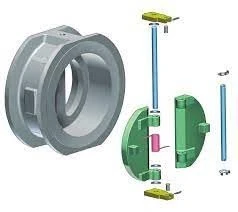
- Wafer Check Valves: Wafer Check Valve is a compact type of check valve that is installed between two flanges. They are lightweight and cost - effective, making them popular in many industrial applications. Their compact design also allows for easy installation in limited - space environments.
Applications of Check Valves
- Water and Wastewater Treatment: In water treatment plants, check valves are used to prevent the backflow of treated water into the untreated water supply. They are also used in sewage systems to prevent the reverse flow of wastewater, which can cause flooding and contamination.
- Oil and Gas Industry: Check valves play a vital role in oil and gas pipelines. They are used to prevent the backflow of oil or gas, which can cause pressure surges, equipment damage, and safety hazards. In offshore platforms, check valves are used in various systems such as hydraulic systems and fuel supply systems.
- Power Generation: In power plants, check valves are used in steam and water circuits. They prevent the backflow of steam or water, which can damage turbines, boilers, and other equipment. They are also used in cooling water systems to ensure the proper flow of water through heat exchangers.
- Chemical Processing: In chemical plants, check valves are used to prevent the mixing of different chemicals due to backflow. They are also used in pumping systems to protect pumps from damage caused by reverse flow.
Why Choosing the Right Check Valve is Essential
Selecting the appropriate check valve for a specific application is crucial for the efficient and safe operation of the system.
- Flow Requirements: Different check valves have different flow characteristics. For example, swing check valves are better suited for low - velocity flows, while lift check valves can handle high - velocity flows. Choosing the wrong valve can result in excessive pressure drop, which can reduce the efficiency of the system.
- Pressure and Temperature: The pressure and temperature of the fluid in the system also play a significant role in valve selection. Some check valves are designed to operate at high pressures and temperatures, while others are suitable for low - pressure and low - temperature applications. Using a valve that is not rated for the correct pressure and temperature can lead to valve failure and system damage.
- Sealing Performance: A good check valve should provide a tight seal to prevent backflow. The sealing performance depends on the type of valve, the material of the valve seat and disc, and the operating conditions. In applications where a small amount of backflow can cause significant problems, such as in some chemical processes, a high - quality check valve with excellent sealing performance is essential.
Quality Assurance as a Supplier
As a check valve supplier, we understand the importance of providing high - quality products. We use advanced manufacturing techniques and high - grade materials to ensure the durability and reliability of our check valves. Our valves undergo rigorous testing procedures, including pressure testing, leakage testing, and performance testing, to meet the highest industry standards.
We also offer a wide range of check valves to meet the diverse needs of our customers. Whether you need a swing check valve for a large - diameter water pipeline or a wafer check valve for a compact industrial system, we have the right solution for you. Our technical team is always ready to provide professional advice on valve selection and installation to ensure that you get the best performance from our products.
Contact for Procurement and Negotiation
If you are in the market for high - quality check valves, we invite you to contact us for procurement and negotiation. Our experienced sales team will work closely with you to understand your specific requirements and provide you with the most suitable check valve solutions. We are committed to providing excellent customer service and competitive pricing. Whether you are a small - scale business or a large industrial enterprise, we can meet your check valve needs.

References
- "Valve Handbook" by E. Richard Munson.
- "Fluid Mechanics" by Frank M. White.
- Industry standards and guidelines related to check valve design and application.