


Hey there! As a supplier of Wafer Check Valves, I often get asked about the cracking pressure of these valves. So, I thought I'd write this blog to break it down for you in a simple and easy-to-understand way.
Let's start with the basics. A Wafer Check Valve is a type of valve that allows fluid to flow in one direction only. It's commonly used in various industries, such as water treatment, oil and gas, and chemical processing. The cracking pressure is a crucial parameter of a Wafer Check Valve, and it's something you need to understand if you're in the market for one.
What is Cracking Pressure?
The cracking pressure of a Wafer Check Valve is the minimum upstream pressure required to open the valve and allow fluid to flow through it. In other words, it's the pressure at which the valve "cracks" open. Once the pressure reaches this point, the disc inside the valve moves away from the seat, creating an opening for the fluid to pass.
Think of it like opening a door. You need to apply a certain amount of force to push the door open. Similarly, the fluid needs to have enough pressure to overcome the force holding the valve disc against the seat. This force can come from a spring or the weight of the disc itself, depending on the design of the valve.
Why is Cracking Pressure Important?
Understanding the cracking pressure of a Wafer Check Valve is essential for several reasons. Firstly, it ensures that the valve operates correctly. If the cracking pressure is too high, the valve may not open when it should, causing a blockage in the system. On the other hand, if the cracking pressure is too low, the valve may open prematurely, leading to backflow and potential damage to the system.
Secondly, the cracking pressure affects the efficiency of the system. A valve with the right cracking pressure will allow the fluid to flow smoothly through the system, reducing energy consumption and improving overall performance.
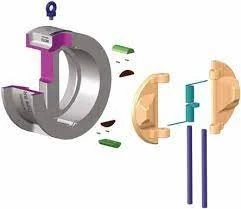

Factors Affecting Cracking Pressure
Several factors can influence the cracking pressure of a Wafer Check Valve. Let's take a look at some of the most important ones:
- Spring Design: Many Wafer Check Valves use a spring to hold the disc against the seat. The stiffness of the spring plays a significant role in determining the cracking pressure. A stiffer spring will require more pressure to compress, resulting in a higher cracking pressure.
- Disc Weight: In some valves, the weight of the disc itself provides the force to keep the valve closed. Heavier discs will require more pressure to lift, leading to a higher cracking pressure.
- Seal Design: The design of the seal between the disc and the seat can also affect the cracking pressure. A tight seal may require more pressure to break the seal and open the valve.
- Fluid Properties: The properties of the fluid, such as its viscosity and density, can impact the cracking pressure. For example, a more viscous fluid may require more pressure to flow through the valve, increasing the cracking pressure.
How to Choose the Right Cracking Pressure
When selecting a Wafer Check Valve, it's crucial to choose the right cracking pressure for your application. Here are some steps to help you make the right decision:
- Understand Your System Requirements: First, you need to understand the operating conditions of your system. This includes the pressure range, flow rate, and the type of fluid being used. Based on this information, you can determine the appropriate cracking pressure.
- Consult with a Professional: If you're unsure about the cracking pressure requirements, it's always a good idea to consult with a professional. As a Wafer Check Valve supplier, we have the expertise and experience to help you choose the right valve for your needs.
- Consider the Application: Different applications may require different cracking pressures. For example, in a low-pressure system, a valve with a low cracking pressure may be sufficient. However, in a high-pressure system, a valve with a higher cracking pressure may be necessary.
Types of Check Valves and Their Cracking Pressures
There are several types of check valves available, each with its own cracking pressure characteristics. Let's take a look at some of the most common types:
- Wafer Check Valve: These valves are known for their compact design and low cracking pressure. They're often used in applications where space is limited and a low-pressure drop is required.
- Lift Flange Check Valve: Lift check valves typically have a higher cracking pressure compared to wafer check valves. They're suitable for applications where a higher flow rate and pressure are required.
- Double Disc Swing Check Valve: Double disc swing check valves have a moderate cracking pressure. They're commonly used in large-diameter pipelines and applications where a quick closing action is required to prevent backflow.
Testing and Verification
Once you've selected a Wafer Check Valve with the appropriate cracking pressure, it's important to test and verify its performance. This can be done through various methods, such as pressure testing and flow testing. By testing the valve, you can ensure that it meets the specified cracking pressure and operates correctly in your system.
Conclusion
In conclusion, the cracking pressure of a Wafer Check Valve is a critical parameter that affects its performance and the efficiency of your system. By understanding what cracking pressure is, the factors that influence it, and how to choose the right cracking pressure for your application, you can ensure that your system operates smoothly and effectively.
If you're in the market for a Wafer Check Valve or need more information about cracking pressure, don't hesitate to reach out. As a trusted supplier, we're here to help you find the right valve for your needs. Contact us today to start the conversation and let's work together to find the perfect solution for your system.
References
- "Valve Handbook" by J. S. Tuzson
- "Fluid Mechanics and Thermodynamics of Turbomachinery" by S. L. Dixon