


Hey there! As a check valve supplier, I've gotten tons of questions about the different types of check valves. One of the most common queries is about the difference between a wafer-type check valve and a flanged check valve. So, let's dive right in and break it down.

Basic Structure and Appearance
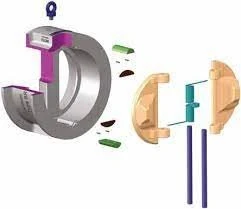
First off, let's talk about how these two types of check valves look. A wafer-type check valve is super compact. It's designed to fit between two flanges of a pipeline. You don't need any extra space on either side for additional mounting hardware. It's kind of like a thin slice that gets sandwiched in the pipeline. This design makes it a great choice when space is limited.
On the other hand, a flanged check valve has flanges on both ends. These flanges are used to bolt the valve to the pipeline. It's bulkier compared to the wafer-type valve because of these flanges. The flanges add some extra length and width to the valve, but they also provide a more secure and stable connection to the pipeline.
Installation Process
The installation process for these two valves is quite different. Installing a wafer-type check valve is relatively quick and easy. You just need to place the valve between the two flanges of the pipeline and then bolt the flanges together. Since it's so thin, you don't need to worry about aligning a lot of parts. It's a straightforward process that can save you time and labor costs.
For a flanged check valve, the installation is a bit more involved. You have to align the flanges of the valve with the flanges of the pipeline precisely. This requires careful measurement and adjustment to make sure everything lines up correctly. Then, you need to bolt all the flanges together tightly. The installation of a flanged check valve might take a bit longer, but it provides a very solid and reliable connection.
Cost Considerations
When it comes to cost, wafer-type check valves are generally more budget - friendly. They use less material because of their compact design. Also, the installation is quicker and easier, which means lower labor costs. If you're working on a project with a tight budget, a wafer-type check valve could be the way to go.
Flanged check valves, however, are more expensive. The extra material used for the flanges adds to the manufacturing cost. And the more complex installation process means higher labor costs. But if you can afford it, the added reliability and durability might be worth the extra expense.
Application Scenarios
Let's talk about where these valves are typically used. Wafer-type check valves are commonly used in systems where space is at a premium. For example, in small industrial plants or on offshore platforms where every inch of space counts. They're also great for applications where the pressure is relatively low and the flow is not extremely high. You can check out our Wafer Check Valve for more details on this type.
Flanged check valves are often used in high - pressure and high - flow applications. The flanges provide a strong connection that can withstand the forces exerted by the fluid in the pipeline. They're also suitable for applications where the pipeline needs to be disassembled and reassembled frequently. For instance, in large chemical plants or power generation facilities. If you're looking for a reliable non - return valve for such applications, take a look at our Non - return Valve.
Sealing Performance
Sealing is an important aspect of check valves. Wafer-type check valves usually have a good sealing performance, but they might be more prone to leakage under high - pressure conditions. This is because the sealing depends on the compression between the two flanges, and if the pressure is too high, it could cause the seal to break.
Flanged check valves generally have better sealing performance, especially in high - pressure applications. The flanges can be tightened more securely, and there are often additional sealing gaskets between the flanges. This provides a more reliable seal that can prevent fluid leakage. Our Pressure Seat Swing Check Valve is a great example of a flanged check valve with excellent sealing capabilities.
Maintenance Requirements
Maintenance is another factor to consider. Wafer-type check valves are relatively easy to maintain. Since they're small and simple, it's easy to access the internal parts for inspection and cleaning. If a part needs to be replaced, it can usually be done quickly and without too much hassle.
Flanged check valves, on the other hand, require a bit more maintenance. The flanges need to be inspected regularly for signs of wear or damage. And if a part inside the valve needs to be replaced, it might be more difficult to access because of the flanges. But with proper maintenance, a flanged check valve can last a long time.
Conclusion
So, to sum it up, the main differences between a wafer - type check valve and a flanged check valve lie in their structure, installation, cost, application, sealing performance, and maintenance requirements. Wafer - type check valves are compact, affordable, and easy to install, making them suitable for low - pressure and space - constrained applications. Flanged check valves are more robust, reliable, and better for high - pressure and high - flow applications, although they're more expensive and require more maintenance.
If you're in the market for a check valve and still not sure which one is right for your project, don't hesitate to reach out. We're here to help you make the best choice. Whether you need a wafer - type check valve or a flanged check valve, we've got you covered. Contact us today to start the procurement discussion and find the perfect check valve for your needs.
References
- "Valve Handbook"
- Industry standards and guidelines for check valves