


Hey there! As a check valve supplier, I often get asked about the maintenance interval for check valves. It's a crucial question because proper maintenance ensures these valves work efficiently and last a long time. In this blog, I'll break down what affects the maintenance interval and give you some general guidelines.
First off, let's understand what a check valve does. A check valve allows fluid to flow in one direction only. It prevents backflow, which can cause all sorts of problems in a system, like damage to pumps or contamination of the fluid. We offer different types of check valves, such as the Single Disc Swing Check Valve, Lift Flange Check Valve, and Wafer Check Valve. Each type has its own characteristics and maintenance needs.
Several factors influence the maintenance interval of a check valve. The first one is the operating environment. If the valve is in a harsh environment, like one with high temperatures, high pressures, or corrosive fluids, it'll need more frequent maintenance. For example, in a chemical processing plant where the fluid is highly corrosive, the valve's internal parts can wear out quickly. The corrosion can damage the sealing surfaces, leading to leaks. In such cases, I'd recommend checking the valve every 3 - 6 months.
The flow rate and pressure of the fluid also matter. High - flow and high - pressure applications put more stress on the valve. The constant force of the fluid can cause the valve's moving parts, like the disc or the piston in a lift check valve, to wear down faster. In a high - pressure water pipeline, for instance, the valve may need to be inspected every 6 - 12 months. On the other hand, if the flow rate and pressure are relatively low, like in a small domestic plumbing system, the maintenance interval can be extended to 1 - 2 years.
The frequency of operation is another key factor. A check valve that opens and closes frequently is more likely to experience wear and tear. In a system where the pump starts and stops often, causing the check valve to open and close with each cycle, the valve should be checked more often. Maybe every 6 months or so. But if the valve is in a system that operates continuously with a steady flow, it can go longer between maintenance checks, perhaps 1 - 2 years.
Now, let's talk about the general maintenance steps and how they fit into the maintenance schedule. The first step is a visual inspection. You should look for any signs of external damage, like cracks in the valve body or leaks around the flanges. This can be done during routine system checks. For valves in normal operating conditions, a visual inspection every 3 - 6 months is a good idea.
Next is the internal inspection. This involves disassembling the valve to check the internal components. You need to look at the disc, the seat, and the springs (if any). Check for signs of wear, corrosion, or debris buildup. For valves in harsh environments, internal inspections should be done every 3 - 6 months. In less demanding conditions, once a year is usually sufficient.
Cleaning is also an important part of maintenance. Over time, debris can accumulate inside the valve, affecting its performance. You can use a suitable cleaning agent to remove the dirt and scale. Cleaning frequency depends on the environment. In a dirty or dusty environment, you may need to clean the valve every 3 - 6 months. In a clean environment, once a year should be enough.

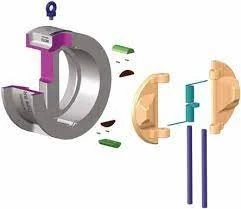
Replacing worn - out parts is often necessary during maintenance. If you find that the disc or the seat is damaged beyond repair, you'll need to replace them. Make sure to use high - quality replacement parts that are compatible with your valve. The replacement interval depends on the wear rate of the parts, which is influenced by the factors we discussed earlier.
Let's take a closer look at the different types of check valves and their specific maintenance intervals. The Single Disc Swing Check Valve has a disc that swings open and closed. The hinge mechanism of the disc can wear out over time. In a normal industrial application, a visual inspection every 3 - 6 months and an internal inspection once a year are recommended. If the valve is in a high - flow or high - pressure system, the internal inspection may need to be done every 6 months.
The Lift Flange Check Valve has a piston or a disc that moves up and down to allow or block the flow. The guiding mechanism and the sealing surfaces are critical. In a system with normal operating conditions, a visual inspection every 6 months and an internal inspection every 1 - 2 years should be sufficient. But in a harsh environment, these intervals should be shortened.
The Wafer Check Valve is compact and often used in pipelines with limited space. Its maintenance interval is similar to other check valves, but because of its design, it may be more sensitive to debris buildup. So, in a dirty environment, more frequent cleaning and inspection are needed.
In summary, there's no one - size - fits - all answer to the question of the maintenance interval for a check valve. It depends on multiple factors, including the operating environment, flow rate, pressure, and frequency of operation. By following the guidelines I've provided, you can ensure that your check valves operate smoothly and have a long service life.
If you're in the market for high - quality check valves or need more advice on valve maintenance, don't hesitate to reach out. We're here to help you find the right solution for your specific needs. Whether you're a small business or a large industrial plant, we've got the expertise and the products to meet your requirements. Let's start a conversation about your check valve needs and how we can work together to keep your systems running efficiently.
References
- ASME (American Society of Mechanical Engineers) standards on valve maintenance
- Manufacturer's guidelines for check valve operation and maintenance