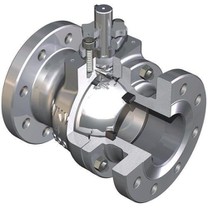



There are many possible factors that may be used as the basis for the decision to use a stop valve instead of a ball valve, including but not limited to the following specific aspects:
1. The characteristics of closure
A stop valve is a valve that must be forced to seal. When closing, a certain amount of pressure must be applied to the valve disc to ensure that the sealing surface will not leak. The friction between its sealing surfaces is very small, which ensures excellent sealing performance and its service life is relatively long. Some stop valves use double-layer sealing technology to ensure that they will never leak.
Ball valve: Although its sealing surface is mainly composed of plastic and other elastic materials to ensure excellent sealing performance, the sealing effect of these materials may be limited under certain high pressure or high temperature conditions.
Second point, obstacles caused by fluids
The significant characteristic of the stop valve is that the media path inside the valve body is quite complex, which increases the resistance of the fluid, resulting in an increase in power consumption.
Among all valve types, the fluid resistance of the ball valve is the smallest, and even the reduced diameter ball valve has extremely small fluid resistance. Therefore, in those applications where fluid resistance needs to be reduced, ball valves show more significant advantages.
3. Adjust the performance accordingly
Stop valve: Although this valve is mainly used for full open and full closed operations, it can also adjust the flow to a certain extent. The valve disc of this device can stay in the specified place stably when moving, so as to achieve effective adjustment of the flow.
Ball valve: Due to its special structural design, its adjustment performance is not very good. In the case of precise adjustment of flow, we may consider choosing a ball valve with a special structure (such as a V-type ball valve) or consider other types of regulating valves.
4. About the uniqueness of the environment and medium used
Stop valves can be applied to a variety of different substances, such as liquids, gases and steam. This method is particularly suitable for application environments that require strict sealing treatment, such as the aerospace industry and chemical engineering pipelines. In addition, stop valves are also suitable for substances containing large particles, high viscosity, and easy coking, because these substances may cause wear on the sealing surface of the ball valve.
Ball valve: Although ball valves have a wide range of uses in multiple application scenarios, their applicability may not be as ideal as stop valves in some specific use occasions. For example, in pipelines filled with large amounts of particles or viscous substances, the cover of the ball valve is very susceptible to wear and damage.
V. Content related to operation and maintenance
Globe valve: Although its operation process is relatively simple, it may require greater force when starting or closing. Its design is very simple and it is relatively simple to manufacture and maintain.
The uniqueness of the ball valve is that it is easy and fast to use. Whether it is opening or closing, it is extremely fast. It only needs to rotate 90° to complete the process from fully open to fully closed. In addition, the structure of the ball valve is very simple, and its sealing ring is generally movable, which makes it very convenient to disassemble and replace.
After comprehensive consideration, the decision to use a globe valve instead of a ball valve may involve multiple complex factors, including sealing efficiency, fluid resistance, adjustment performance, use environment and medium characteristics, as well as operation and maintenance. In actual operation, we need to think deeply based on the specific use requirements and working environment to choose the most suitable valve type.