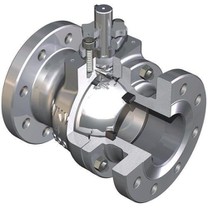



Liquid level control is the key to ensure the stable operation of the system in the fields of industrial production, civil water supply and agricultural irrigation. float valve, as the core part of liquid level control, has become the invisible guardian of automatic rehydration and balance of water level in water tank, pool and storage tank. This paper will analyze the float valve series from the working principle, structure classification, application scenarios, selection key points, maintenance and so on to help readers grasp the key components of floating valve selection and application skills.
I. Working Principle of Float Valve: Wisdom of Mechanical Liquid Level Control
The core principle of the float valve is based on the "buoyancy law" and "lever drive." The automatic control of the liquid level is realized by the opening and closing of the valve triggered by the float ball. Its typical workflows are as follows:
Liquid level drop: When the water level in a water tank drops, the float ball sinks as the level drops. Through the pull valve disc through the connecting rod, water inlet channel opens and external water supply is automatically replenished until the water level rises to the set height.
Elevated level: Elevated level causes the float ball to float and the connecting rod pushes the disc to close, cutting off water inflow and preventing the water tank from overflowing.
Dynamic balance: Through the linkage of the float ball to the disc, the system always maintains the liquid level within the preset range, without human intervention.
Advantages: no electric drive, simple structure, quick response speed, suitable for low cost sensitivity and accuracy.
ii. Classification and Structure Analysis of Float Valves: Breakdown by Material, Function and Scenario
float valves can be divided into the following types, depending on material, function and application:
1. By Material
Stainless steel float valve
The main body is made of 304/316 stainless steel and has a strong corrosion resistance, suitable for corrosive media such as seawater and chemical liquids. It is commonly found in industrial water tanks and sewage treatment equipment.
Plastic float valve (PVC/PP)
It is light weight, low cost, acid and alkali resistant, but poor heat resistance. Suitable for low temperature environment such as household water tanks and agricultural irrigation.
Copper float valve
It has good thermal conductivity and strong antibacterial properties and is often used in hot water supply systems such as solar water heaters and boiler toners.
2. By function
float valve are usually opened
By default, the valve is opened and closed when the level rises to a set height. It is suitable for situations where high levels of fluid need to be continuously water replenishment.
float valve Normally closed
By default, the valve closes and opens when the level drops to a set height. Suitable for protection scenarios against overflow.
Double Position Flotation Valve
There are two float balls, one high float ball and one low float ball, which control water intake and drainage respectively, thus achieving doublethreshold level management (such as pool level control).
3. By Structure
Straight Rod float valve
The float ball and disc are connected by a straight rod. Simple structure, large amplitude of movement, suitable for small water tanks.
Lever Flotation Valve
The displacement of the float ball is magnified by lever, reducing the force required to open and close the disc for large diameter and high pressure situations.
float valve installed on the side
Valves are installed on one side of the water tank. Floating balls move vertically to save space and are suitable for long, narrow water tanks.
Iii. float Valves Core application scenarios: Home to Industry Coverage.
Float valves are their universality and widely used in the following areas:
1. Civilian water supply system
Household water tank replenishment
basement water are automatically replenished through float valves to prevent water shortages or spills.
Toilet tank control
The water inlet valves of traditional toilet mostly adopts the floating valve structure, realizes automatic adjustment of water level.
2. Industrial level management
Cooling tower water replenishment
Keep cooling tower water level stable to prevent equipment from overheating due to evaporation.
Chemical storage tanks level control
Stainless steel float valves is used for acid and alkali storage tanks to prevent corrosive liquid overflow.
Boiler make-up water system
Copper float valves is suitable for high temperature environment to ensure the safety of boiler water.
3. Agriculture and environmental protection
Irrigation pool water replenishment
Agricultural irrigation water tanks are automatically replenished through float valves, reducing the cost of manual inspection.
Sewage treatment equipment
Control the liquid level in tank and sedimentation tank to prevent sewage overflow or idling of equipment.
IV. Key points Selecting Float Valves: 5 core parameters determine performance.
When selecting a float valve, the following factors should be taken into account to ensure compatibility with working conditions:
Moderate characteristics
Corrosive media (e.g. seawater, acid and alkali solutions) should be made of stainless steel or plastic.
High-temperature media,such as hot water and steam, should be made of copper or high-temperature resistant plastics.
Work pressure and temperature
Verify that the rated pressure of the valve (e.g. PN16, PN25) matches the system pressure;
Plastic flotation valves are typically ≤80°C, while metal valves can withstand higher temperatures.
Connection method and diameter
Select flange connection or threaded connection according to pipe specifications.
For largeflow, large diameter valves (e.g. DN50 and above) should be selected.
Float ball material and dimensions
The larger the float ball, the stronger the drive, but the response speed may decline.
Lightweight float balls (such as plastic ones) are suitable for low pressure situations and metal ones are suitable for high pressure situations.
Installation method
Top mounting type (valve on top of water tank) is suitable for open water tanks.
Side mounting type (valve is located on the side of the water tank) is suitable for sealing water tanks or limited space.
V. Maintenance and troubleshooting of floating valves: three main points for prolonging service life
1. Periodic inspection and cleaning
Wash the dirt on the surface of the float ball to prevent the attachment from causing a change in buoyancy.
Check the sealing performance of the disc and replace the aged sealing ring.
2. Anti-jamming treatment
In impurity water, install a filter to prevent the disc from getting stuck.
Move the valve regularly to prevent mechanical adhesion due to prolonged inactivity.
3. Common Faults and Solutions
Valves cannot be closed.
Causes: floating ball damage, disc seal wear, impurity stuck.
Treatment: Replace float ball or sealing ring and clean valve cavity.
Frequent valve opening and closing
Reason: the liquid level fluctuates greatly, the float ball installs the position incorrectly.
Solution: Adjust the height of the float ball or add buffer device.
Float ball sinks;
Reason: Floating ball leaks, takes on water.
Solution: replace the float or fix leakage point.
vi. Future trends: Smart energy efficiency upgrades
With the development of Internet of Things (IoT) technology, traditional float valves are developing in the direction of intelligence.
Electronic level sensor + solenoid valve
The liquid level is monitored by sensor in real time, and the water inlet is controlled by solenoid valves to improve the control precision.
Solar float valve
Integrated solar-powered modules for use without power supply (e.g. irrigation in remote areas).
Energy Saving float valve
Optimize flow path design, reduce flow resistance and reduce energy consumption.
Epilogue: Gadgets play a big part. Choosing the right float valve can make a huge difference.
Although the floating valve is simple in structure, it is an indispensable core part of the liquid level control system. From household water use to industrial production, its reliability directly affects the stability and safety of the system. Through reasonable selection, standard installation and regular maintenance, we can maximize the performance advantages of float valves and providecost-effective solutions for various liquid level management scenarios. In the future, with technological upgrading, the float valve series will continue to develop in the direction of intelligent, energy conservation, bringing more innovative value to the industry.
Zhejiang Sunawei Valve Co., Ltd
+86-577-67330098
 Language
- English
- slovenščina
- magyar
- Italiano
- Čeština
- O'zbek
- اردو
- Türkçe
- Latviešu
- Português
- ไทย
- فارسی
- عربي
- हिंदी
- Melayu
- Việt Nam
- Nederlands
- Español
- Български
- Deutsch
- українська
- íslenska
- Cymraeg
- hrvatski
- Svenska
- slovenčina
- Polski
- Norsk
- Srbija jezik (latinica)
- Kreyòl Ayisyen
- עברית
- русский
- Malti
- Lietuvių
- Ελληνικά
- Français
- Indonesia
- Català
- Bai Miaowen
- 日本語
- România limbi
- dansk
- Eesti
- বাংলা
- 한국어
- bosanski
- Gaeilgenah Éireann
- suomi