


In layman's terms, stainless steel is steel that is not easy to rust.
First, let's talk about the principle of stainless steel.
The rust and corrosion resistance of stainless steel is due to the formation of a chromium-rich oxide film (passivation film) on its surface. This rust resistance and corrosion resistance are relative. Tests show that the corrosion resistance of steel in weak media such as atmosphere and water and in oxidizing media such as nitric acid increases with the increase of chromium content in steel. When the chromium content reaches a certain percentage, the corrosion resistance of steel changes abruptly. , that is, from easy to rust to not easy to rust, and from corrosion-resistant to corrosion-resistant.
Why does stainless steel rust?
Anyone in the stainless steel industry knows that unless you kick a donkey in the head, no one will give you a guarantee that it won't rust. Some people think that stainless steel will never rust. In fact, this is a one-sided misunderstanding of the lack of understanding of stainless steel.
Stainless steel does not necessarily rust, but the corrosion rate is much lower than other steels in the same environment, sometimes even negligible. But not any kind of stainless steel, which can resist corrosion and rust in any environment.
Stainless steel relies on a very thin, firm, fine and stable chromium-rich oxide film (protective film) formed on its surface to prevent the continuous infiltration and oxidation of oxygen atoms to obtain the ability to resist rust. Once for some reason, this film is continuously damaged, oxygen atoms in the air or liquid will continue to infiltrate or iron atoms in the metal will continue to separate out, forming loose iron oxide, and the metal surface will be continuously corroded.
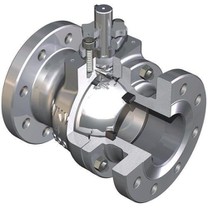
Stainless steel valve
What situations in daily life are likely to cause stainless steel to rust
There are many forms of damage to this surface film, the most common in daily life are the following:
1. When the kitchen is renovated, welding debris, cement, oil stains, etc. remain on the surface of faucets and sinks. If not cleaned in time, it may cause rust and mildew;
2. Sometimes, dust with minerals or acid and alkali in the newly renovated house will fall on the faucet, and the surface of the sink will also cause "floating rust" when it encounters moisture;
During use:
1. Kitchen knives, scissors, bottle openers and other steel items are placed on the surface of the sink for a long time, which will cause rust, mildew or discoloration;
2. Chemicals, cleaning agents, paints, sauces, oil stains, etc. remain in the faucet and sink. Over time, it will cause mildew to stick to the surface of the faucet and sink;
3. The water quality in many parts of our country is poor. In addition, too many water pipes are galvanized pipes, and the content of iron and other elements in the water is too high. After the water tank is used, if there are many water stains left, the iron in the water will rust over time, especially New house decoration, such as long-term residual water in the water pipe, leaving water stains on the sink, it is easy to cause rust if it is not cleaned in time.
In addition, these two basic substances can destroy the passive surface layer of stainless steel and cause corrosion to it:
Mechanical abrasives: refers to things that will scratch the surface of steel, such as: steel scrapes, wire brushes, and metal fragments.
Bleach: It's everywhere. Exist in water, food, salt. The worst of these come from household and industrial cleaners.